Find out if your dog is left-handed or right-handed
Studies confirm that dogs are also dominated by one of their two brain hemispheres.

WHY CAN DOGS BE BOTH LEFT-HANDED AND RIGHT-HANDED?
Approximate reading time: 7 minutes
Just like people, dogs can also be right-handed or left-handed depending on which hemisphere of their brain is dominant. This condition, which also occurs in cats, primates and birds, works in a cross-functional manner. This means that dogs with a dominant right hemisphere will be left-handed and dogs with a dominant left hemisphere will be right-handed.
Studies have found that left-handedness is more prevalent in these animals than in humans. While 8 to 12% of people are left-handed, up to 50% of dogs may be left-handed.
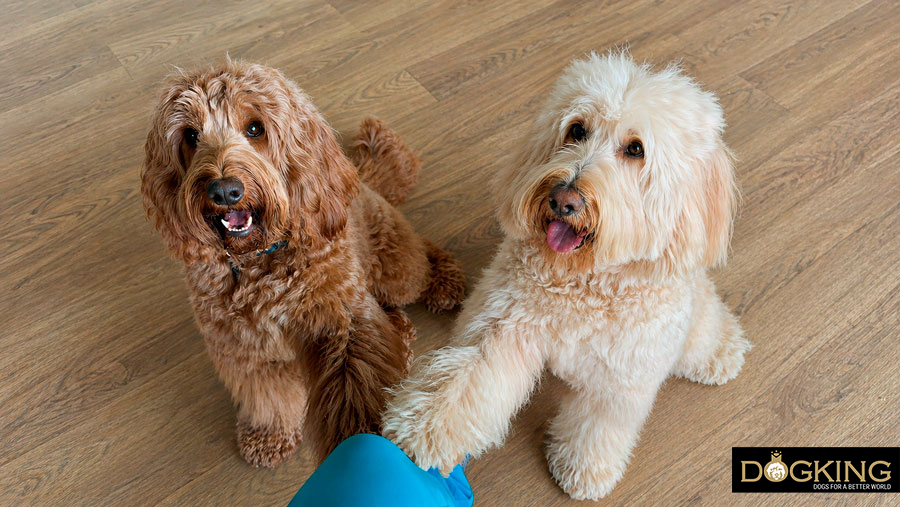
Table of contents
1. How do you know if your dog is left-handed, right-handed or ambidextrous?
2. Are there differences between right-handed and left-handed dogs?
How do you know if your dog is left-handed, right-handed or ambidextrous?
You may have wondered whether your dog uses their right or left side more. To find out, all you have to do is observe them carefully in different situations to determine which of the two front legs they use predominantly. Here are some situations in which you can easily find out if your pet is right-handed or, on the contrary, left-handed. Please note that for these exercises to be reliable, you need to practise them many times and then take an average. Just because your dog has a dominant paw does not mean they will always use it first, but it will be the one they will use most of the time. Furthermore, if you are unable to determine a preference for one paw or the other, your dog is probably ambidextrous, i.e. both hemispheres are equally dominant.
1. During play

A good way to find out whether your dog prefers to use their left or right side is to look closely at their movements while you are playing. For example, if you are using a bone, rope or ball and you try to take it away from them, with which of the two front paws do they protect the object? Or if you are the one with the toy, with which limb are they trying to get it?
2. With food
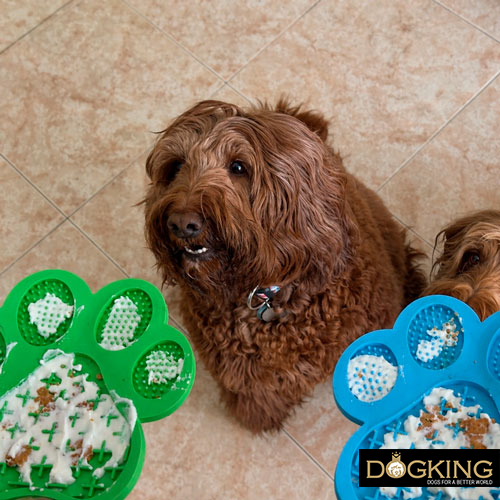
Offer a small piece of their favourite food or a treat and then hide it in your hand. In addition to nuzzling you or perhaps letting out a few whimpers, your pet will more than likely try to get the food with one of their paws. Eating is a very instinctive thing for any animal, which will make your dog act more unconsciously and use the dominant paw.
You can also try placing the snack in a place that is inaccessible to your dog, but where they can see and smell it. You will see that they will be eager to get the treat and will use the dominant paw, left or right, to do so.
3. With training
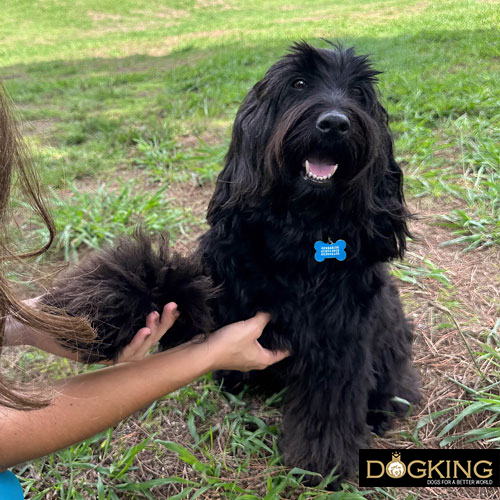
If you have started in the world of training, surely one of the first exercises you have taught your dog is to give you their paw. In this case, see which of the two paws they spontaneously offer you when you ask them to do so. Be sure to position yourself centrally in front of the dog when practising this trick, so as not to condition them to deviate to one side or the other.
4. Exercising
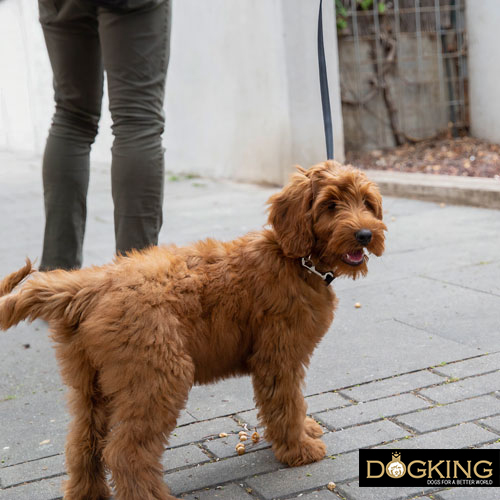
Watching your dog while exercising is a great way to find out which side is dominant. For example, you can notice which paw they start to climb the stairs at home when you come home from a walk or which paw they lean on for a big jump while playing with other dogs in the park. Chances are that your pet will use the paw that they feel most secure and confident in these types of physical activities.
5. In racing
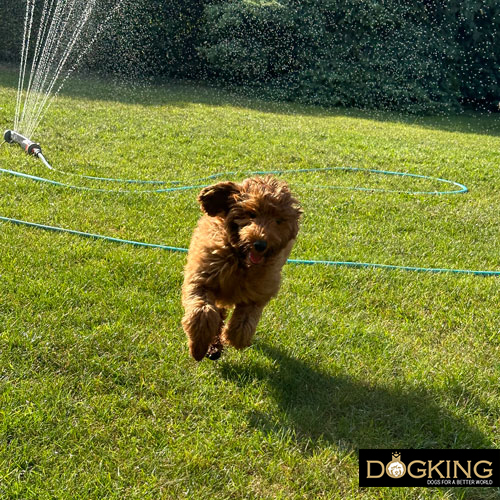
One exercise you can do with your dog to find out if they are right- or left-handed is to throw a toy that they particularly like. At that moment, look very carefully at which paw starts the race, as it will most probably be the dominant paw.
Are there differences between right-handed and left-handed dogs?
At DOGKING we work with our Australian Cobberdogs regardless of which hemisphere dominates them. All of them receive personalised training adapted to the needs of each case. Due to their good temperament, it is very easy to work with these dogs and great results are achieved with all of them.
And you, what are you waiting for to find out if your dog is left-handed or right-handed? This is undoubtedly a curious fact that, although it has no relevance within a healthy lifestyle and correct training and socialisation, it is interesting to know.