Differences between an ethologist and a dog trainer: which one to use?
Two basic professionals for your dog's well-being

DIFFERENCES BETWEEN A DOG ETHOLOGIST AND A TRAINER: WHICH ONE TO CONSULT?
Approximate reading time: 7 minutes
You have probably heard about the importance of dog trainers and dog ethologists when there is a problem with a dog's behaviour. Perhaps you have even thought about which one to turn to in order to treat or improve some aspect of coexistence with your pet. It is normal that you have doubts, as both trainers and ethologists are professionals related to this area, so confusion between the two is common. On the other hand, given the importance of both training in the management of canine behaviour, there are more and more multi-purpose professionals offering both services. So what exactly is an ethologist and how do they differ from a trainer?
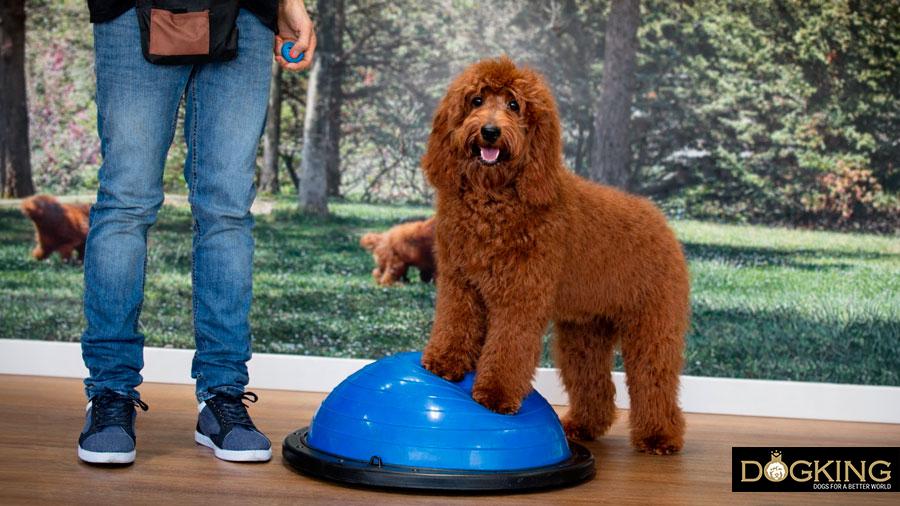
Broadly speaking, an ethologist is a clinical professional who studies animal behaviour in the wild. They are animal behaviourists, in this case of dogs, who establish what is normal and expected behaviour at all levels. The handler, on the other hand, is in charge of training the dog to teach them to perform certain tasks or specific actions through commands or signals. However, on a practical level, it is too basic to define a professional dog handler in this way as, in most cases, they are also involved in managing the emotions and behaviour of dogs. Let's take a closer look at what the work of ethologists and handlers is and when it is best to choose one or the other to help our dog.
Table of contents
1. What does a canine ethologist do?
2. What does a dog trainer or trainer do?
3. When to choose an ethologist and when to choose a dog trainer?
What does a canine ethologist do?
Ethologists are professionals who observe and analyse dog behaviour to detect disorders such as phobias, anxiety, canine OCD or aggression. In other words, ethology studies why animals behave the way they do. To do this, they take into account the context in which the problem occurs, its frequency, and study the animal's day-to-day life, considering aspects such as the diet, sleep pattern, exercise or level of socialisation. All this data is collected, either by the professional himself or by the owners, in an ethogram.
Based on this in-depth analysis, the clinical ethologist establishes the causes and a diagnosis, prescribing changes to initiate treatment to modify the behaviour. In severe cases, the professional may prescribe medication for support. In short, ethologists are clinical experts in canine behaviour modification, and investigate physical, mental and emotional levels, including the dog's body language, to make their diagnoses.
What does a dog trainer do?

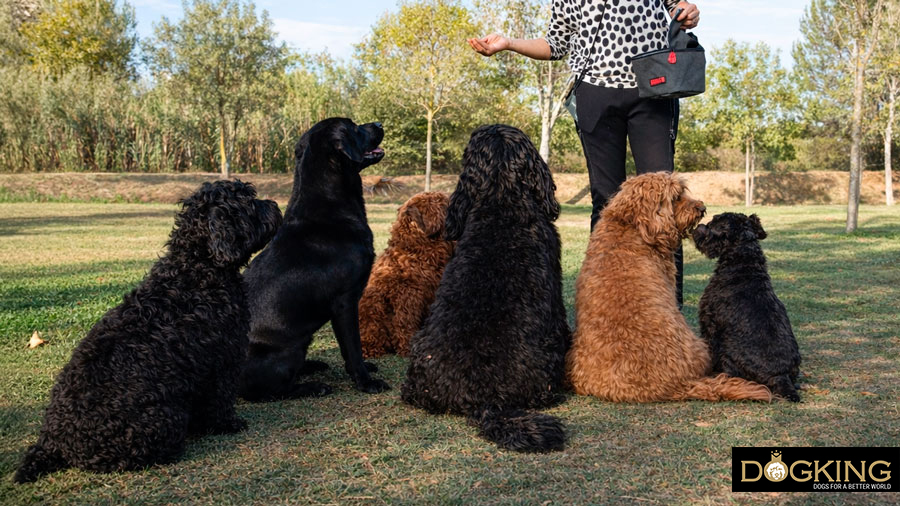
A dog trainer is a professional who is responsible for training the animal to perform certain tasks, as well as to achieve certain physical goals. They can also teach these pets to stop unwanted behaviour, such as jumping on people, for example. These actions can be basic, such as teaching the dog to walk beside its owner during walks, to release things from its mouth when asked to do so, or to respond to a call. Although owners can train their pets in the simplest tasks when they are puppies, sometimes it is not possible or learning becomes complicated. This is where the professional trainer comes in, whose role can also be more complex.
For example, professionals who train rescue dogs or police dogs are handlers. The same is true for assistance dogs, which help people with difficulties to overcome everyday obstacles, or for therapy dogs, which work in the consulting room helping patients with all kinds of physical and psychological problems to recover. In both cases, the dogs are trained by the handlers. The Australian Cobberdog canine therapists we have at Dogking are dogs trained specifically for the purpose for which they are required. Thanks to their flexible nature and intelligence, as well as the right personalised training, they are excellent therapists who help many people.
When to choose an ethologist and when to choose a dog trainer
At this point, you are probably wondering how to know exactly which professional to choose for your dog's behavioural problems. If we are talking about physical training, or about teaching specific behaviours or actions that, due to lack of discipline and lack of knowledge, we cannot implement in our pet on our own, then we will need a dog trainer. In the case of emotional regulation problems and behavioural disorders such as phobias, separation anxiety or obsessive-compulsive behaviour, the most appropriate professional is the ethologist.
However, in some more complex cases it will be necessary for both professionals to intervene, either simultaneously, or one first and the other later. On the other hand, let us not forget that many professionals are trained in both training and ethology, so it is often not so important to distinguish between ethologists and trainers, but rather to investigate the professionalism and references of the person in question. When choosing an ethologist or trainer, it is best to ask about their experience, their training, whether they have dealt with similar cases and, above all, to consult their reviews. Furthermore, regardless of the professional's prestige, the best way to assess whether he/she will be good for your dog is to check that he/she is comfortable with the sessions or interventions and that you feel comfortable with his/her methods.
Ethologists and trainers are professionals who work on dog behaviour. Although their roles are different, there are points of convergence. Nowadays, most ethologists are trained in training and most handler-trainers are trained in ethology. If you want to use a good professional, look at their procedures and their work to offer your dog the best possible help.