Types of dog food: pros and cons
We look at dry, wet, freeze-dried and raw dog food.
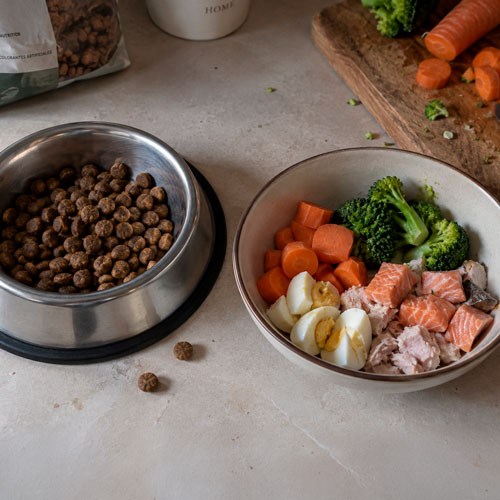
WHAT FOOD IS BEST FOR MY DOG?
Approximate reading time: 8 minutes
Once puppies have finished their suckling phase, in which they drink only their mother's milk, dogs should gradually start to eat solid food. Nowadays, there are different dog food options on the market, which can give rise to many doubts about which is the best alternative for your pet.
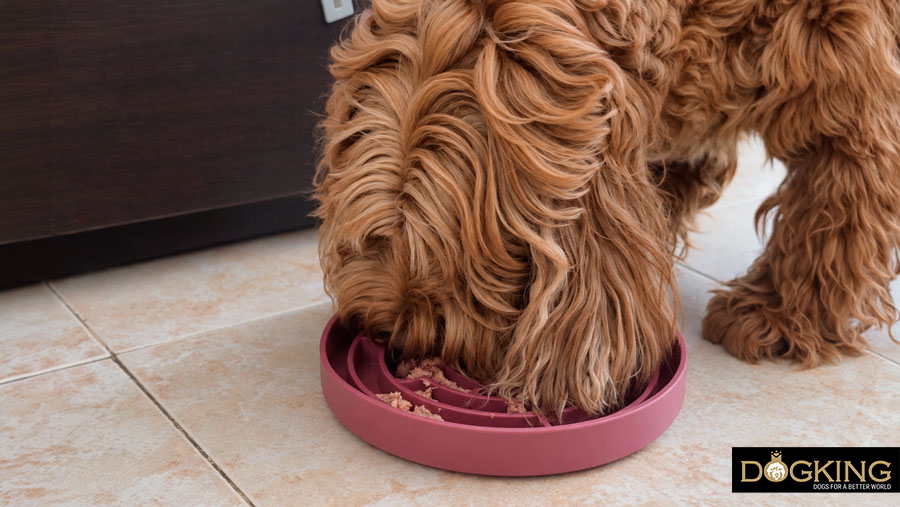
The most common dog foods are dry food, but this does not mean that it is the best but the most convenient, wet food tins, homemade food, freeze-dried food or the BARF (raw food) diet. However, the most important thing is that, whatever type of food you choose, it should be of good quality, with the right ingredients, free from additives and, of course, adapted to your dog's nutritional needs at every stage or situation in their life. A senior dog's diet is very different from that of a young dog, and it is also necessary to consider certain conditions such as allergies, overweight, digestive problems, etc. In short, the best food for your dog is the one that gives them the energy they need, adapts to their characteristics and contains good ingredients for their health (as well as being appetising, of course!).
Table of contents
1. Advantages and disadvantages of different dog foods
• Dehydrated dog food or dog food
3. What food do dogs like best?
Advantages and disadvantages of different dog foods
As with people, food is one of the cornerstones of a dog's health, so we should not underestimate the importance of choosing a quality food. A proper diet will not only make your dog's coat softer and shinier, but will also look after their overall health: their teeth, their internal organs, they will be more energetic and vital, and you will be able to prevent many ailments and illnesses.
Below we explain what the main canine foods you can give your dog consist of. Being well informed will allow you to make a good choice and thus take care of your dog's health so that they will accompany you for many years with an excellent quality of life.
• Raw food or BARF diet
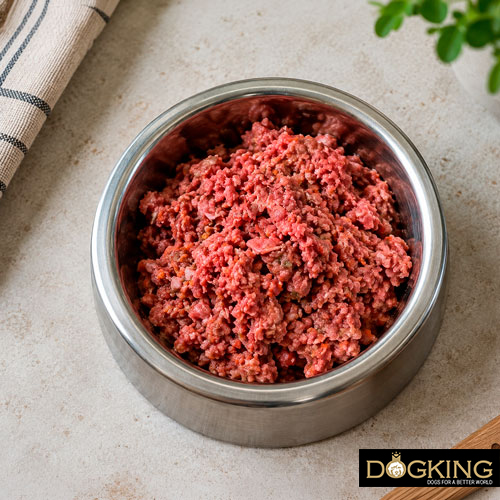
The BARF diet is one of the most popular diets of recent times. It is a return to what would be the natural diet of dogs as carnivorous animals in the wild, and is based on feeding them ingredients such as meaty bones, lean meats, offal and vegetables. As a natural diet, it offers many benefits to the dogs' bodies, strengthening their immune system and promoting the absorption of nutrients.
Dogking has created a specific diet for the Australian Cobberdog, created by nutritionists. It is distributed frozen for easy storage. No cooking is required, it's as easy as from freezer to fridge and fridge to plate.
• Cooked diet for dogs
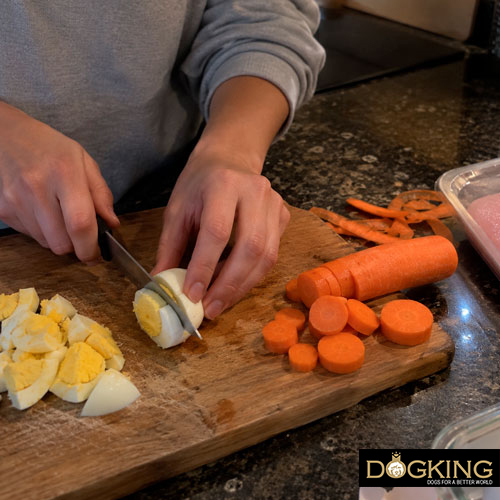
This is a good option if you have the time to cook for your dog, but it is vitally important to visit a canine nutritionist to formulate the right diet to avoid deficiencies or excesses of certain nutrients.
There are many people who claim that their dog eats ‘everything’ and has never had any problems. The homemade diet for dogs is not about giving them leftovers of our cooked food. Although dogs are omnivores and tolerate a wide variety of ingredients, we must be very careful not to offer them foods that are safe for us but highly toxic for them, such as grapes, onions or chocolate, to give a few examples.
Dogs can be fed homemade food with foods such as turkey, carrots or eggs, but we must be very clear about which other ingredients are not safe. In this case, although it is a natural diet with many benefits, it is more dangerous, as we need to be very well informed.
• Dehydrated dog food or dry dog food
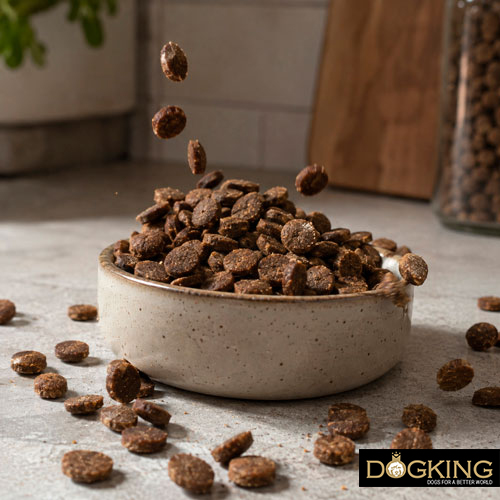
Dry dog food is the most common alternative when it comes to feeding these pets, due to its convenience, but let's not forget that it is an ultra-processed product and is not the healthiest for your dog.
Dogs are omnivores, so ideally most of their diet should be made up of protein, so before choosing based on price or brand popularity, take a look at the label.
If you are feeding your dog, we recommend that you choose a quality dog food that contains meat or fish as the first ingredient (be wary if it says ‘animal protein’ without further specification, as these are likely to be by-products with little nutritional value). Other healthy ingredients are vegetables and, depending on your pet's needs, cereals in smaller proportions. Some dogs have intolerances or do not need added carbohydrate intake because they are overweight, while others may benefit from a small intake of grain (check with your vet if you are unsure about this).
You will also need to monitor your dog's water intake, as this type of food, being dry, does not provide hydration to the body. Always leave a bowl of clean, fresh water next to their food and make sure they are drinking enough to avoid problems.
• Wet dog food
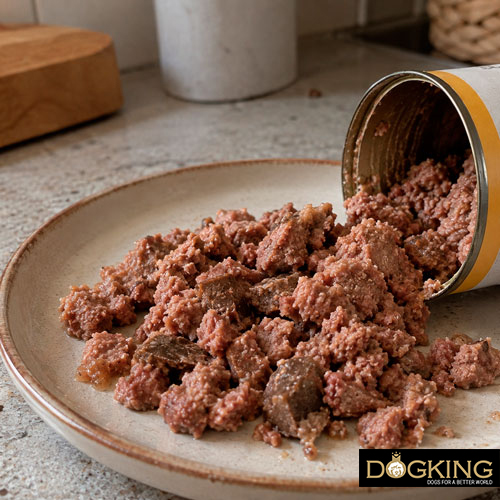
Wet dog food includes both canned food and the typical dog sausages, although the most common are the former. They are usually made from meat.
As with dry dog food, the important thing is that you can tell from the labelling whether it is a quality food or whether it contains unnecessary and dangerous by-products and additives. If you choose this type of food, be careful when storing it, as it spoils and monitor your pet's tartar regularly.
• Freeze-dried dog food
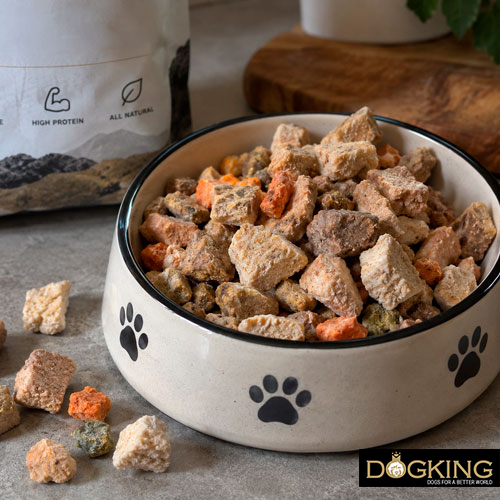
This type of food is somewhere between the two previous ones, as it is presented in dehydrated form, but is rehydrated with warm water (or broth, if you want to make it even tastier) for consumption, so that it is juicier. Freeze-drying is a process by which water is removed from food (usually meat such as beef or fish) at a very low temperature. This allows the properties of the ingredients to be better preserved than in feed, where dehydration is carried out at high temperatures. However, this type of feed is not as popular or accessible, as many specialised shops do not stock it or it is very expensive.
What about dog snacks?

If you like to give your dog treats on a daily basis to reward them for good behaviour, to give them that extra motivation in your training exercises or simply because you feel like giving them a treat, choose snacks that are as natural as possible. You can prepare them yourself at home with ingredients that are safe for your pet, or use pieces of turkey, ham or fruit as treats. Avoid highly processed snacks or those with a lot of additives, as some low-quality snacks even contain sugar, which is highly toxic for your dog. If you have any doubts about ingredients, you can check which foods are unsafe for pets with official sources or your vet.
What food do dogs like best?
The saying ‘to each his own’ also applies to our big furry friends. Every dog is different and will have different preferences, although they are generally crazy about natural diets, whether homemade or raw (BARF). If you have any doubts about dog food, consult a vet who specialises in nutrition. Remember that a good diet is synonymous with your dog's well-being and a way of guaranteeing a long and healthy life at your side. Enjoy!