What to do if my dog has fleas?
How to prevent and treat this common parasite in dogs.

WHY DO DOGS GET FLEAS?
Estimated reading time: 9 minutes
Throughout their lives, dogs can face different parasite infections, with fleas being the most common. These small, 1 to 4 mm long insects find the dog's coat an excellent place to live and breed. Fleas are external parasites that feed on the blood of our pets by biting their skin, causing them a great deal of discomfort and putting their health at risk.

The main problem with fleas is that they reproduce very quickly, laying up to 40 eggs a day. For this reason, if your dog picks up fleas, it is important to detect it as soon as possible to prevent the infection from spreading, leading to infestation. Fleas can cause itching and irritation to your dog's skin, as well as carrying an intestinal parasite that could be transmitted to the animal, as well as other very serious diseases such as plague or typhus (although these cases are very rare). Fortunately, getting rid of fleas on your dog is simple if you follow the right steps. Read on to find out what to do if your dog gets fleas and how to prevent re-infection.
Table of contents
1. How to tell if my dog has fleas
2. Dangers of flea infection in dogs
4. How do I get rid of fleas on my dog?
5. How can I prevent my dog from getting fleas?
How do I know if my dog has fleas?
If you notice that your dog is scratching excessively all over their body, even going so far as to nibble at their skin with uneasiness, it is likely that they have fleas. To find out for sure, the first thing to do is to carefully seperate their fur in the area of their back that is most accessible. If you see tiny black or brown bugs, bingo, your poor furry friend has contracted fleas. Even if you don't see any bugs on your dog's skin, we suggest you try this trick: take a piece of paper and a fine-toothed comb and run it through your pet's fur in the opposite direction of growth. If your dog has fleas, the white surface of the paper will be full of brown and white dots, corresponding to the waste and eggs of these parasites, or if when you brush it, black dandruff comes out and when you wet it, it turns reddish, which is the poo.
Dangers of flea infection in dogs
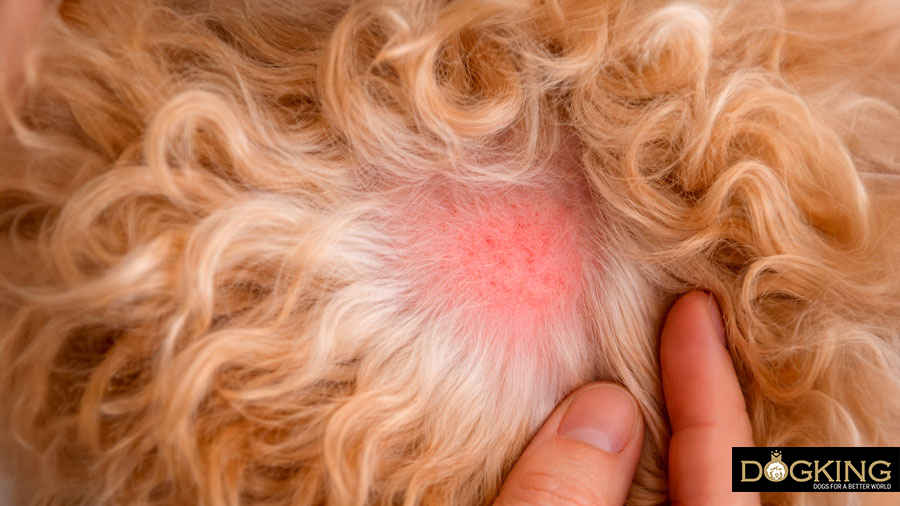
Most commonly, the effects of a flea infestation on your dog are limited to the annoying itching and irritation of the skin, which is not uncommon. This can make your furry friend feel listless, not so keen to eat or play. However, there are other problems caused by these external parasites that you need to watch out for. After several infections, your dog may develop an allergy to flea saliva, leading to dermatitis. In addition, in small dogs or puppies, a high presence of fleas can cause anaemia. In addition, the most common flea variety in dogs next to the cat flea (Ctenocephalides Canis) is the Ctenocephalides Canis or dog flea, a carrier of an intentional parasite that causes many problems for dogs.
Why has my dog picked up fleas?
Before you ask yourself in despair why your pet has been so unlucky as to get fleas, let us tell you that this is a very common parasite in dogs. Almost every dog will get a flea infection at some time in their lives. Although there are a few things that predispose a dog to contracting these parasites, in reality anyone can be susceptible to fleas. These insects have the ability to jump more than 30 cm lengthwise, so if your dog comes close to another dog with fleas, it is enough for them to become infected. We have already seen how easily these bugs reproduce, so if just one flea lands on your pet's fur, a much larger infection can develop within a few days. Of course, sick dogs with a weakened immune system are more likely to pick up fleas. Also those with poor hygiene, as the grease, dandruff and environmental dirt that accumulate on the animal's skin are the perfect breeding ground for fleas to develop.
How to get rid of fleas on my dog?
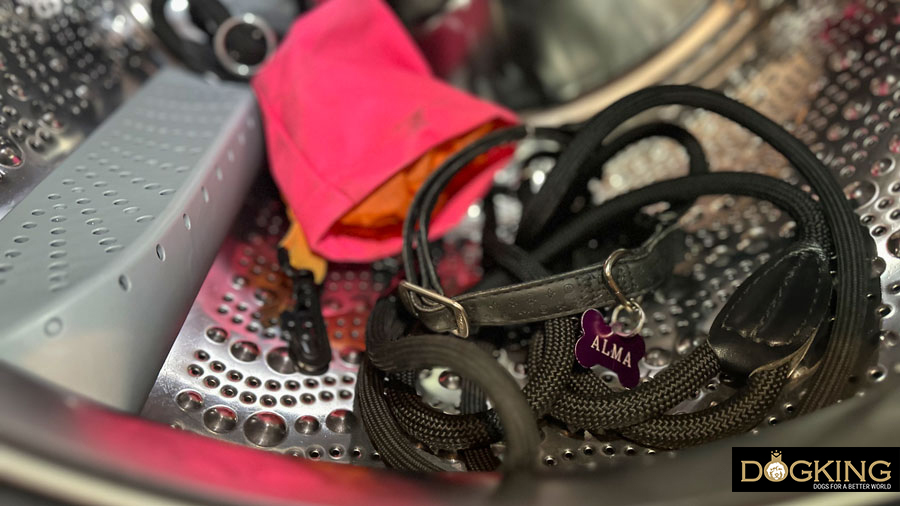
If you detect that your dog has fleas, as long as it is not a large infestation, you can treat it at home, although do not hesitate to consult your vet if you have any questions about the products you can use or how to use them. Here are some tips on how to get rid of fleas on your dog and in your home.
- Disinfect your home: wash any textiles in your home at high temperature, including sheets, bedspreads, blankets, cushions... These surfaces are very friendly to fleas, so they could also lay eggs on them as well as on your dog's fur. We recommend disinfecting floors and surfaces with neutral products (remember that chemicals are very aggressive to dogs' sense of smell) and reinforcing sterilisation with an organic insecticide.
- Wash your dog's accessories: put all your dog's blankets, beds or textile toys in the washing machine with a natural disinfectant product. Use a long wash cycle at a high temperature. This will ensure that no fleas or eggs survive.
- Bathe your dog with a flea shampoo: you can buy it in specialised dog shops, either physical or online. Be sure to use the appropriate amount and follow the instructions on the bottle. If in doubt, consult your vet. If your dog has sensitive skin or is a puppy, seek professional advice before using this type of product. For young dogs, there are specific sprays with a low concentration of the flea-killing chemical.
- Use a flea pipette. A couple of days after bathing, protect your dog with a special external parasite pipette. Please note that the dosage of the pipette depends on the weight of the animal. You can also put a flea collar on your dog to reinforce the protection.
- PILLS: There are also oral treatments to prevent them.
How can I prevent my dog from getting fleas?
Fleas are easily transmissible and reproduce rapidly in dogs' bodies, so there is often nothing you can do to prevent your pet from catching them. However, there are ways to protect your furry friend so that he or she is much less likely to pick up fleas. Of course, don't forget to give your pet a regular deworming treatment as prescribed by your vet. Use extra protection (collars, sprays, pills, etc.) if you are going on a trip to the countryside or any other area where you think there may be a risk, although ideally you should avoid these places. In addition, if you get into the habit of checking your pet's coat every few days, you will be able to detect flea infestations more quickly. If the infestation is recent, bathing with a normal shampoo is sufficient, as the water drowns them. If it is not a recent infestation, you will start treatment before a major infection occurs and your furry friend will feel better in a short time.
As for natural methods, such as eucalyptus, lemon or chamomile, you can try them to reinforce your dog's flea prevention or treatment, but they should never be the only method, as their effectiveness has not been proven and your pet's condition could worsen if the infection continues to progress.
If your dog is a puppy and you see fleas, we advise you to visit your vet. At this young age, dogs are more vulnerable, as their immune system is not fully developed. The vet will advise you on the specific treatment to follow in this case. Similarly, seek veterinary care if your dog has a flea infestation, as in such extreme cases, he may need stronger medication that only a professional can prescribe.