When do puppies open their eyes?
Dogs' vision develops little by little from birth.
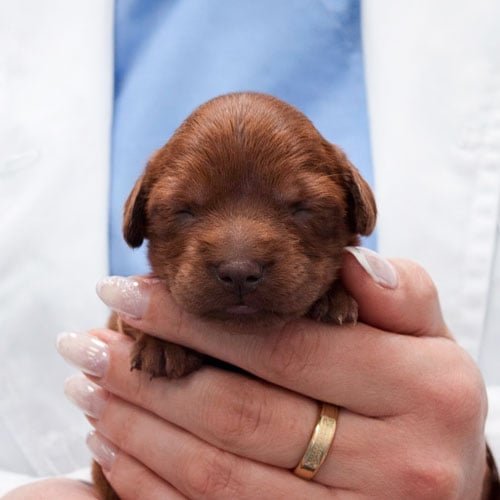
WHAT ARE PUPPIES' EYES LIKE?
Approximate reading time: 7 minutes
Watching the birth and development of puppies is amazing and even touching. When they come into the world, puppies are very small and delicate, but above all, they are adorable. At the beginning, some of their senses and functions are still to develop. This is the case with vision and hearing. At birth, puppies are blind and deaf, as their eyes are totally closed and their auditory canals are still forming. The only senses that dogs have at birth are touch and smell, which they use to find their mother and to be able to feed themselves in their first days of life.
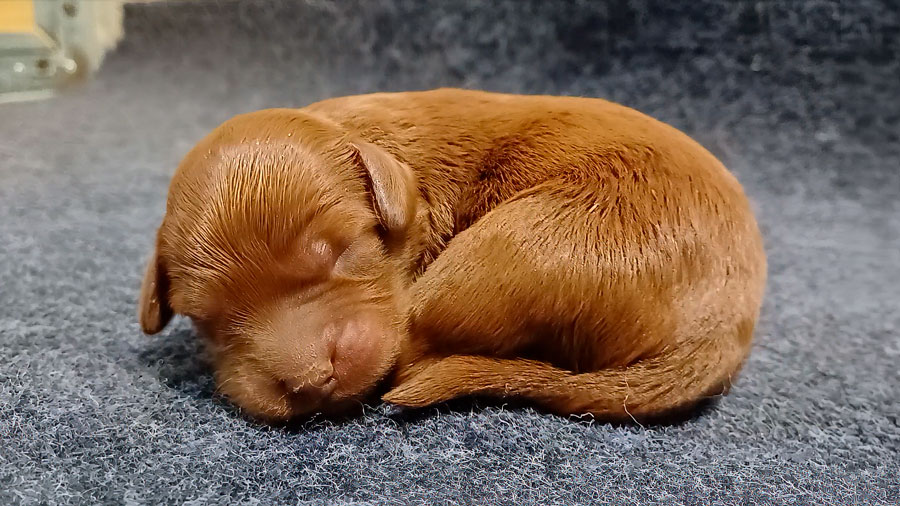
When they are born, puppies have not yet fully developed their third eyelid and iris, so they have a strong sensitivity to light. Therefore, as an instinctive form of protection, their eyelids remain closed, and they only see some shadows and light through them. Without vision and without the ability to hear and orient themselves, puppies are absolutely dependent on their mothers for survival, both for warmth and protection, and for feeding on their milk. They also need to relieve themselves, as it is the mother who stimulates them to pee and poo with her licks.
Table of contents
1. When do puppies fully develop their eyes?
2. What is puppies' vision like?
3. Why are puppies born blind?
4. What to do if my dog takes a long time to open their eyes?
When do puppies fully develop their eyes?
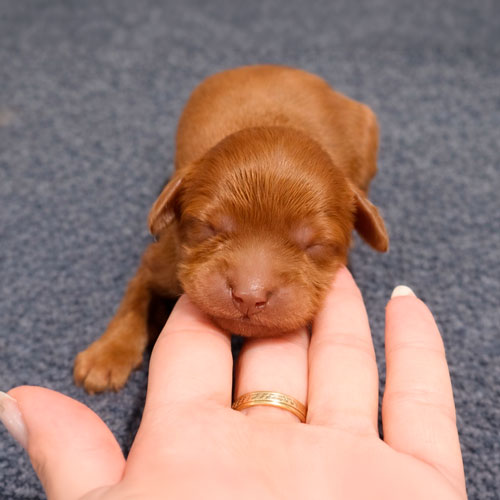
The timing of a dog's development is relative, as depending on the breed or individual animal, there may be variations. However, we can say that puppies open their eyes at around two weeks of age, between day 12 and day 14. This process usually also coincides with the opening of the ear canals, which begin to register the first sounds. Some giant breeds, such as the Great Dane, show their eyes earlier due to their faster development.
What does puppy vision look like?
The process of opening a puppy's eyes does not happen overnight, but is gradual and can take days or even weeks. It can take up to 1-2 months for a puppy to have their eyes fully open. But do puppies see perfectly as soon as their eyes are open a little? Certainly not. Dogs' vision at this age is not yet clear. Their eyes are greyish-blue, and it will take some time for them to fully develop.
Why are puppies born blind?
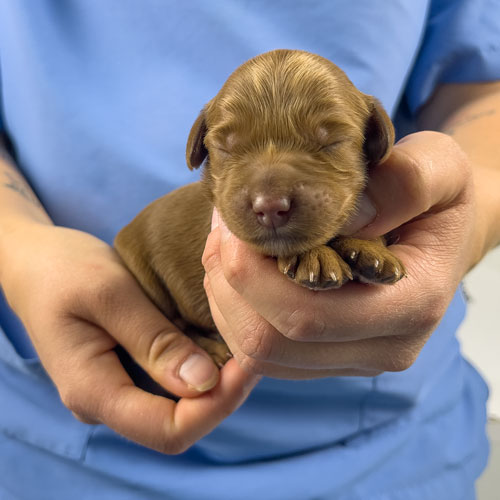
You may be surprised to learn that dogs are born blind, because as predators, this trait makes them vulnerable. However, the truth is that puppies are totally dependent on their mothers at birth, who are responsible for protecting them and keeping them alive. Unlike the offspring of other animals, such as birds or herbivores, mammals are slower to develop, which explains why they are born without sight and hearing. Science believes this is due to the different levels of intelligence, longevity and survival needs of each species.
What to do if my dog takes a long time to open their eyes?
As we said before, every dog is different, and it's OK if yours takes a little longer to open their eyes. What you should never do is try to open their eyelids. Bear in mind that if your pet's eyes are closed, it is precisely to protect them, as they are still forming. Exposing them to light by forcing them open could cause serious eye damage. Do not do this! If your puppy's eyes are completely closed after 20 days of age, you can consult your vet to check that everything is OK. You can also wipe your puppy's eyelids with a clean gauze pad and some saline solution, as it may be that the dried-up mucus is making it difficult for them to open their eyes.
If you notice any worrying signs, such as inflammation, tearing or discharge, see your vet, as there are a number of eye conditions that can affect puppies. At this vulnerable, developing age, it is vital to act early to avoid complications.
How do dogs see the world?
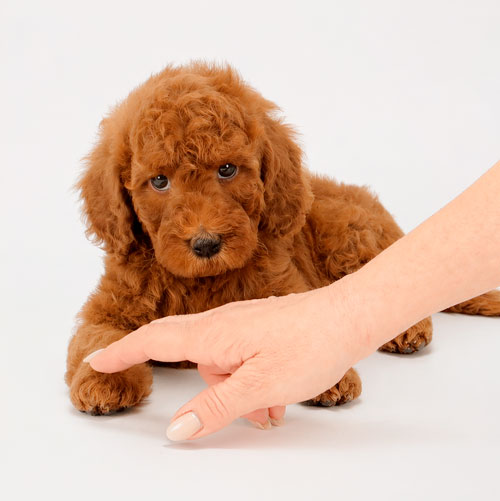
Although dogs' sense of smell is the most predominant sense, they also eventually develop comprehensive vision that allows them to see the world clearly. Dogs' eyesight is not as sharp or colourful as that of people. They do not see very well up close, and are unable to distinguish red and green tones, as their vision is dichromatic (they are sensitive to yellow and blue). What they are far superior to us, however, is their vision in the dark. This is due to a small membrane in their eyes called tapetum lucidum, which reflects light rays like a mirror. And, yes, you guessed it: it's responsible for your furry friend's glowing eyes in some photos.