Why your dog seems to know what you are going to do without you saying anything to them
Dogs are able to predict our actions with their observation and their sense of smell.
WHEN YOUR DOG SEEMS TO READ YOUR MIND
Approximate reading time: 7 minutes
Surely on more than one occasion you have thought that your dog has a superpower: that of guessing every move or action you are going to make. You've probably noticed that your pet knows when it's time for a walk, even before you pick up the lead. Or that, when it's time to feed them, they're already waiting for you in front of their food bowl with a hungry face. Dogs can also anticipate when we're coming home or when it's time to wake up, even anticipating the sound of the alarm clock. Amazing, isn't it?
Table of contents
1. Why does your dog know what you are going to do?
• Dogs measure time with their sense of smell
2. Why does my dog watch me all the time?
Why does your dog know what you are going to do?
Dogs are social animals, which means that for them to feel fulfilled and happy, they need to bond with the people around them. This bond can be very special and strong, and together with the emotional complexity of these pets, it gives rise to a deep interest in analysing and understanding people. In other words, your dog is more aware of you than you think, and throughout their life, they will try to understand you, establish patterns and anticipate your actions. But do you really know how they do it?
• Your dog is watching you
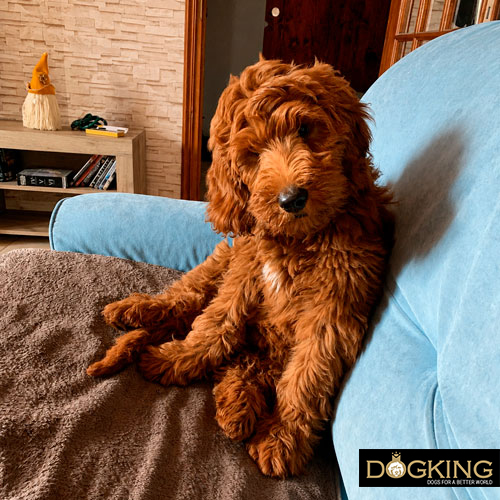
If you've ever caught your dog staring at you, yes, it's because they love you very much, but also because they're studying your gestures and body language. Even when you don't see them your pet is watching you, and through the way you move, the tone of your voice or the expressions on your face, they are able to know how you feel and guess what's coming next. This canine analysis can be very thorough, distinguishing even subtle variations in your non-verbal language. In other words, it's hard to fool your dog, because their brain is very finely tuned when it comes to analysing you. This explains why, even if you don't think you're giving them any reason to suspect it, your furry friend knows exactly when you're going to put them in the bath or when you're going away on a trip.
• Dogs measure time with their sense of smell

In addition to your dog's meticulous observation of your routines, expressions and movements, which allows them to know what you are going to do at any given moment, there is another very powerful mechanism that allows them to measure time and thus anticipate events. This is none other than their highly developed sense of smell, which is 10,000 to 100,000 times more powerful than that of a human. Dogs' noses are able to detect odour particles in the air with great precision and, based on the concentration of these substances, they know what time of day it is.
This doggy “superpower” lets your pet know when you're coming home from work, so they'll be waiting nervously by the door even before you take your keys out of your pocket to open the door. If there's a certain routine to your day, your dog will know when it's time for you to leave, how long you've been gone, when it's time for a walk, playtime or when you're coming home.
• Dogs' circadian rhythms
Your dog's circadian rhythms analyse the amount of light in the environment to distinguish between day and night. It's a kind of biological clock that, by cross-referencing the information you give them with the routines and patterns they establish by observing your behaviour, allows them to predict actions and times in the day. In other words, your dog can “guess” what you are going to do because they know what time of day it is based on these circadian rhythms.
Why does my dog watch me all the time?
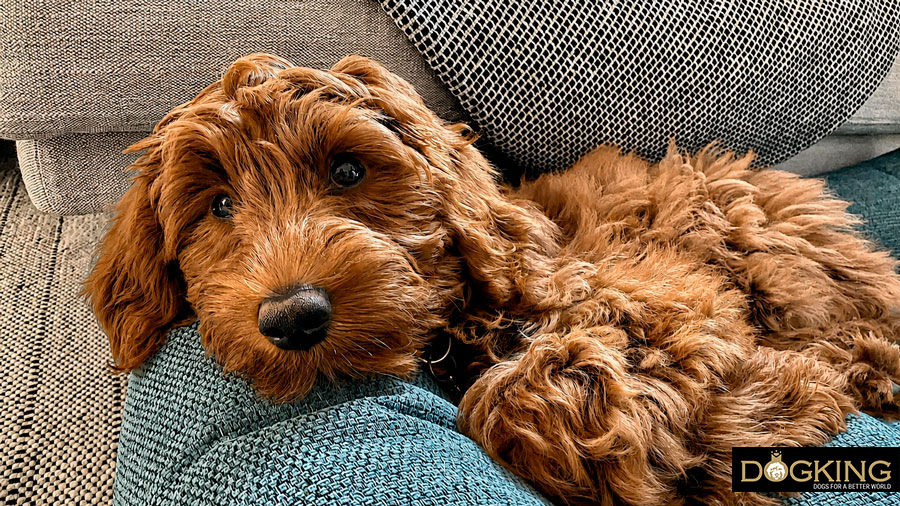
As we have already seen, it is completely natural for your dog to notice you. This behaviour is due to the social nature of these animals and has been accentuated even more by the urban lifestyle. In the past, when people lived in a rural environment, the dog had a clear function, such as hunting or guarding the house, and was much more active. But in city life, the absence of that role makes them much more attached to their families. However, as long as it is not excessive, there is no problem. Your dog appreciates you, wants to understand you and spend more time with you, and therefore watches you. However, if your dog is always looking at you, does not separate from you or shows signs of anxiety when you leave, this could be a case of hyper-attachment, caused by poor socialisation, lack of stimulation or other behavioural problems.
Finally, keep in mind that dogs like routine, as it makes them feel secure. Having regular times to walk, feed and spend time with your furry friend is very beneficial for them and will help them to further develop their ability to ‘read your thoughts’.