How to stop your dog from barking when the doorbell rings
Discover the causes of this canine behaviour and how to avoid it.
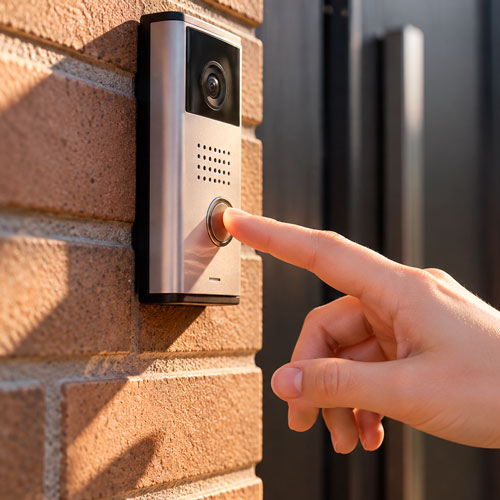
WHY DOES MY DOG BARK WHEN THE DOORBELL RINGS?
Estimated reading time: 8 minutes
Barking is just one of the ways in which dogs communicate. A dog may bark due to lack of socialisation, fear, anger, stress, surprise, joy... This sound is simply a way of expressing their emotions and is therefore totally instinctive and natural. A very everyday situation in which dogs often bark is when they ring the doorbell at home. As soon as the bell rings, it is very common for a dog to bark at the door, although it is important to distinguish between those that bark very loudly and with anxious behaviour, and those that emit just a few warning barks and quickly return to normal.
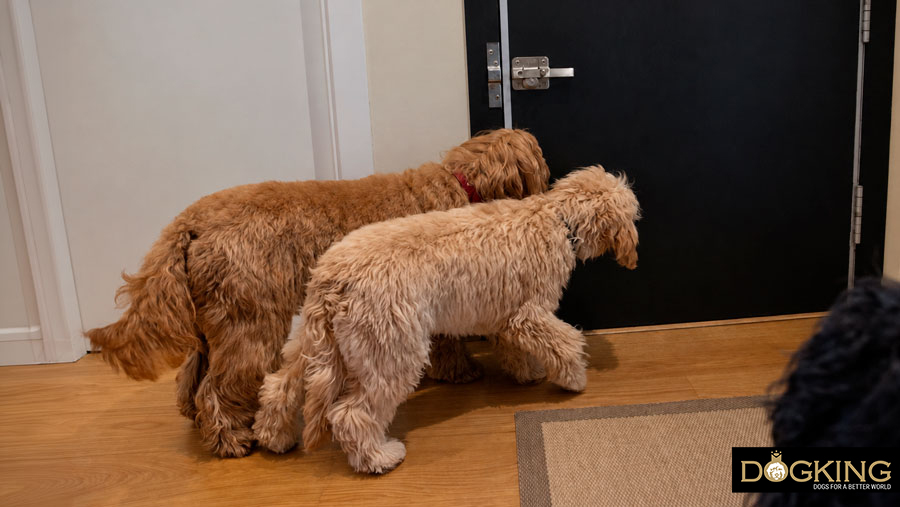
Table of contents
1. What can I do to stop my dog barking when the doorbell rings?
• Make the doorbell a neutral sound for your dog
• Working on signals to get them to back off and relax
2. The importance of a relaxed attitude
3. Don’t strive for perfection
What can I do to stop my dog barking when the doorbell rings?
The first thing is to know why your dog barks.
The main reasons why your dog barks when there is a knock at the door:
- Territorial instinct. Depending on the breed, your dog barks to defend the house and their family, acting as protection against intruders, as they have learned that after the ringing of the doorbell people arrive from outside. In these cases, the dog usually becomes very nervous, with loud and insistent barking accompanied by strong anxiety.
- Surprise or warning. The high-pitched or loud ringing of the doorbell may surprise your dog, alerting them that visitors are arriving. In this sense, it is natural for the dog to bark to alert us to the arrival of visitors to our home. Normally, in this situation the barking is more punctual and there is less tension. It may even be accompanied by happy behaviour if the dog anticipates that a family member he likes is coming to visit.
Although, as we have seen, your dog has their reasons for barking when the doorbell rings, it is a situation that must be managed correctly to prevent them from becoming an anxious behaviour that makes them suffer, but also to avoid problems of coexistence in the home and with neighbours.
• Make the doorbell a neutral sound for your dog.

First of all, it is important to understand how a dog's reactive response to the doorbell originates. The first time they heard this sound, probably as a puppy, they probably felt very surprised or uneasy, or even frightened. They then reacted instinctively with barking, and this behaviour has become fixed over time because they have probably received involuntary positive reinforcement from us when we scold or command the dog to be quiet. Moreover, on those first few occasions when they were confronted with the sound of the doorbell, they learned that people always came home after it, arousing different emotions within them (perhaps joy, if it was someone they knew, or fear, if it was a stranger and they were still in their socialisation phase).
However, what we need to do is to make the doorbell neutral for the dog, so that they don't not overreact and remain calm when the doorbell is rung. Here are two exercises you can practise with your dog to stop them barking when the doorbell rings. The process will be easier and quicker for puppies, but with perseverance and patience, it can also be very useful for your adult pet.
As we were saying, the key is for your pet to stop associating the doorbell with the arrival of people at home, which inevitably results in the emergence of different emotions that make the dog overreact, with numerous barks and a high level of stress. If this is the case with your dog, we advise you to implement this counter-conditioning strategy. Find someone in your family or a friend who is willing to work with you and ask them to ring the doorbell when you tell them to, but not to go upstairs or into the house. When the doorbell rings and your dog starts barking, ask them to sit and offer them small pieces of food or snacks so that they associate the sound with something positive. Be careful about reinforcing barking - always wait until the dog has calmed down a little before rewarding them. The idea is that, through positive reinforcement, our pet understands that people do not always come home when the doorbell rings, and that it is a neutral or even positive stimulus, as good things happen as soon as they hear this sound.
• Work on recall and relaxation cues

Another exercise you can try with your dog to stop them barking so much when the doorbell rings is to ask them to go to their place or to their bed. When the doorbell rings and the barking starts, go very calmly to your furry friend and ask them to sit down. When they relaxe a little, escort them to their bed or a quiet, comfortable space that you determine, while repeating the signal or words you are working on (‘to your place’, ‘to your bed’, etc.). It is important that you do not answer the door until the dog has relaxed, so we recommend that you have a friend help you so that you don't keep anyone waiting so long. Once your pet has stopped barking, you can open the door, let the visitor through and reward your furry friend with lots of petting and a biscuit. You will probably have to repeat this exercise many times. If your dog is an adult, barking at the sound of the doorbell will be a very internalised behaviour, so you will need patience and time.
The importance of a relaxed attitude
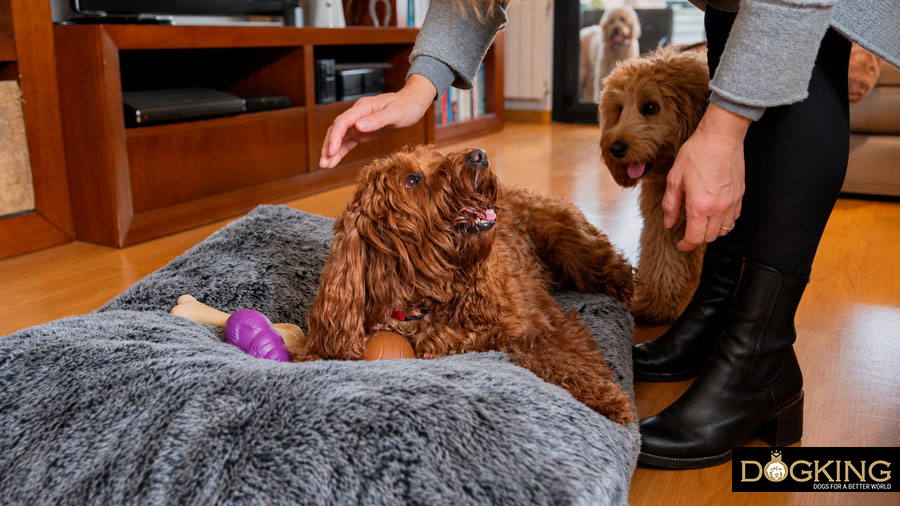
Often we want our dog to be calm and relaxed and we don't realise that we are the ones instilling that level of alertness and nervousness. If you shout ‘I'm coming’ when the doorbell rings, ask someone loudly to open the door, or generally create an atmosphere of tension or confusion, this will be transmitted to the dog. The same is true if you shout or yell at your dog because they bark incessantly. This will do nothing to help resolve the situation, as your pet will interpret your anger as you joining in with their anxious barking.
It is vital that you work with your dog in a calm and collected way, being firm but relaxed. One way of looking at this is that when there is a knock at the door and your dog barks, you answer it as a way of ‘thanking’ them for their warning, and then you deal with the situation as the person in charge of the household and manager of their emotions that you are.
Don't strive for perfection

As we explained at the beginning of the article, your dog barking when there is a knock at the door is not a bad or arbitrary thing. They know very well why they do it and it is up to you to help them manage their emotions at that moment, showing them what you want them to do (to go away) and transmitting the emotions they should feel, calm and relaxaed. However, bear in mind that, depending on your dog's age or personality, they may still bark a little when the doorbell rings. The goal is to eliminate excessive anxiety and constant barking, but it may not always be realistic for your dog to say ‘not a peep’ to a sound that surprises or attracts their attention. The important thing is to get your pet to retreat to their space when you ask them to and to behave calmly while the visitor arrives, regardless of whether they bark naturally.