Dog collars: how and when to use them
Guide to using this recovery accessory on your pet
WHAT IS A DOG COLLAR?
Approximate reading time: 8 minutes
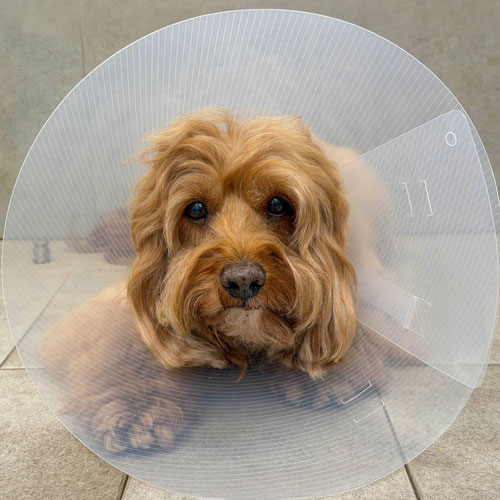
A dog collar, better known as an Elizabethan collar, is a cone-shaped accessory that fits around the dog's neck to prevent them from licking, biting or scratching a wound or injury to their skin, thus protecting their health. When a dog has a trauma of any kind, it is normal for them to try to lick themself to ‘heal’. Their saliva has certain substances that help healing, so this licking is an instinctive and natural way to speed up the healing process.
However, if your dog sucks or bites a wound or scar very insistently, it is very likely that the area will become infected, due to the micro-organisms and bacteria contained in their saliva. Similarly, inflammation and irritation will worsen, delaying recovery. In this context it is very useful to use an Elizabethan collar, named for its similarity to the ruffs typical of the dress of Elizabeth I of England. These collars limit the movement of the dog's head, preventing them from licking the affected part of the body.
Table of Contents
1. When is it necessary to use an Elizabethan collar for dogs?
2. What types of dog collars are there and which one is best?
3. How do I get my dog used to wearing the collar?
4. Is an Elizabethan collar recommended or not?
When is it necessary to use an Isabelline collar for dogs?
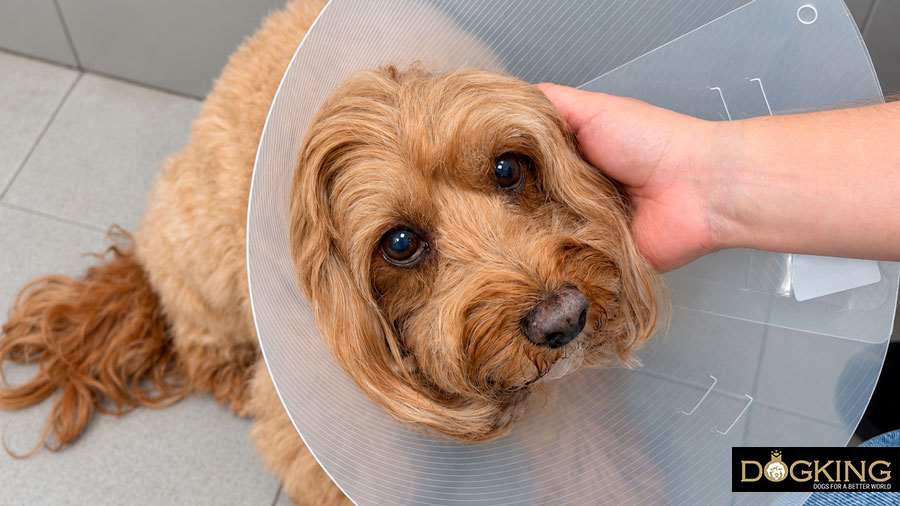
There are different situations in which the vet may decide to place a collar on our furry dog, although its function is always the same: to prevent them from licking their body or touching their face with their paws. The fitting of a collar should be prescribed and carried out by a professional. Some circumstances in which the Elizabethan collar is useful for dogs are:
- Post-operative procedures in which it is not advisable to use bandages.
- Traumatisms such as blows, wounds or bites from other animals.
- If there is a bandage but the dog tries to tear it off without stopping.
- When there are sutures and there is a risk of the animal tearing out the stitches with its tongue.
- In the event of allergic processes on the skin, whether due to bites, food, etc.
- If there is an injury to the face or an ophthalmological treatment.
What types of dog collars are there and which one is best?
Although they all have the same objective (to restrain the dog from licking or biting its wounds), there are different types of collars that can be used depending on the case we are dealing with. In any case, an Elizabethan collar should always be adapted to the breed, weight, size and type of skin (there are hypoallergenic models for dogs that develop allergies due to contact with the collar).
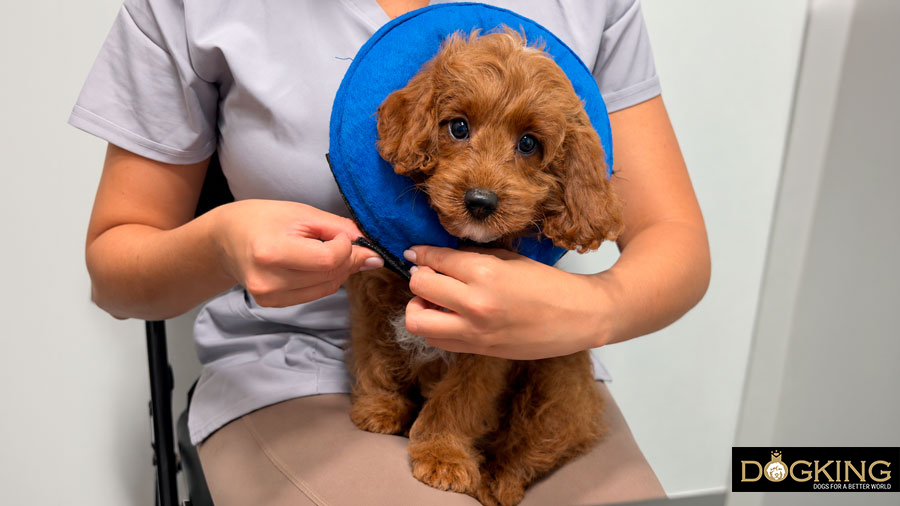
Likewise, the collar should not be too tight or too loose in relation to the dog's neck (we should be able to insert two fingers between the plastic and the dog's skin). Although it is logical and common for wearing a collar to be uncomfortable for our pet, we should always try to make it as atraumatic an experience as possible. Therefore, the collar must fulfil the objective of containing their head, but allow them some freedom of movement so that they can go on with their life ‘normally’, eating, drinking and sleeping with relative ease. These are the most common dog collars available:
- Rigid Elizabethan collar
The most conventional Elizabethan collars that we all have in mind are the rigid ones. They are usually made of light plastic and have the disadvantage that they limit the dog's movement a lot. This can be an advantage for very mobile pets, but can be too uncomfortable and frustrating for others. The best thing to do is to assess whether this type of collar is ideal for your dog with your vet. Depending on each case and the dog's personality and behaviour, the professional will recommend one type of collar or another. In the case of rigid collars, they should ideally be made of a translucent material, so that the dog's peripheral vision is not limited. Some models also have a textile lining and padding in the neck area to prevent the collar from rubbing too aggressively. - Flexible dog collar
Flexible dog collars are usually recommended for animals that are calm or do not have too much strength. They are usually made of flexible nylon and are more ergonomic, offering more freedom of movement to the dog, which can be a problem depending on the case. These Elizabethan collars are usually fastened with velcro, and many are even waterproof and reflective, which is very useful for night-time walks. Again, it should be up to the veterinarian to determine the best restraint system based on the furry patient, their character and medical history. - Inflatable dog collar
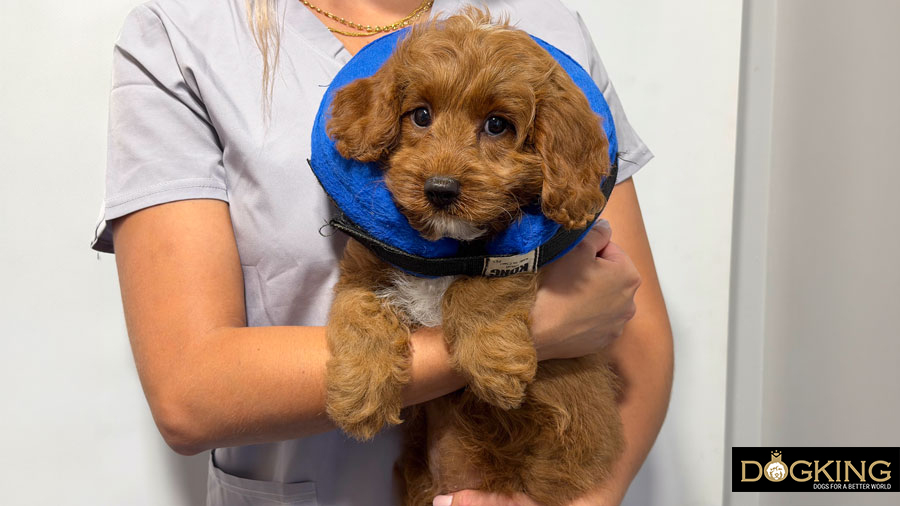
This type of collar is soft and strong. Their strong point is that they manage to block the dog's head, but allow peripheral vision of the animal, which is not the case with other models. This can make the animal more skittish and nervous as they cannot control what is going on around them. If your dog is not too restless, the inflatable collar may be a good alternative. - Alternatives to the collar
Later on, we will see how to get your dog used to the collar so that it does not become a trauma, although in cases where the dog is unable to get used to this element, showing signs of anxiety and an inability to lead a normal life, the vet may suggest other options. There are recovery suits, made of elastic material that give the dog total freedom of movement. There are also special waistcoats, socks or bandages with a bitter taste to prevent the dog from sucking on them. Another alternative is the cervical collar, which does not limit peripheral vision and covers the dog's head, although its use should be assessed by a professional. Bearing in mind that the most important thing is that your dog recovers from their injuries as soon as possible, the ideal is to assess with the vet the option that, while being the most effective, is the least invasive for them.
How can I get my dog used to wearing the collar?
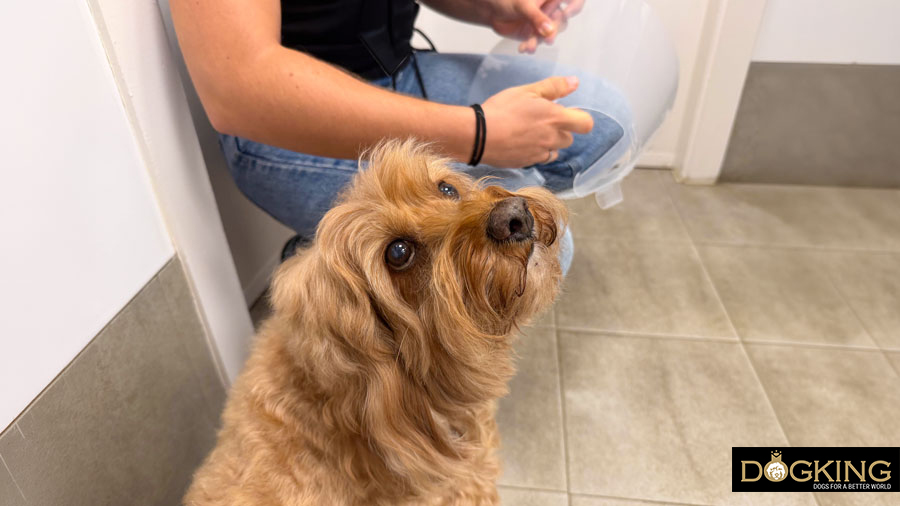
When introducing any new habit into your pet's life, it is vital that you act progressively and that you use the power of positive reinforcement to get them to adapt correctly to the desired behaviour. The case of the collar is no exception. For this reason, and although it may seem exaggerated, we recommend that, if you have a dog, you make the Elizabethan collar a familiar element for them as soon as possible. They may never use it in their whole life, but there are many circumstances that could make it necessary for the vet to fit them with one in the future. From sterilisation, an injury, an allergy... Anticipating these situations will make it much easier for your dog to accept wearing the collar with a good attitude. We recommend you to follow these steps to get your dog used to wearing the collar.
- Even if they won't need it yet, ask your vet to lend you a collar or buy one and show it to your dog so they can smell it, recognise it and associate it with a neutral stimulus. You can even place a treat inside the cone so that your dog will come close to eating it and associate this strange contraption with a positive element. You can even place it unclipped around their neck for a few moments.
- If the occasion arises to put an Elizabethan collar on your pet, having practised the first point will have saved you a great deal of work, but if you have not followed it, you will have to carry out the habituation process more quickly, as the use of the collar may be urgent. To do this, show the accessory to your dog, let them sniff it and put it on at intervals over the course of a day, always reinforcing them with treats or petting.
- Keep a relaxed, easy-going attitude - your dog can sense your mood! If you show worry and stress, it will be very difficult for them to be calm.
- Encourage them to walk by standing in front of them. You can encourage them with a toy or snack.
- Adapt the space to make their life easier on days when they have to wear the collar. Remove obstacles that they might bump into, change their food and water bowls for shallower ones and place them a little higher. Finally, place a small pillow on their bed to make it easier for them to level their head.
Is the Isabelline collar recommended or not?
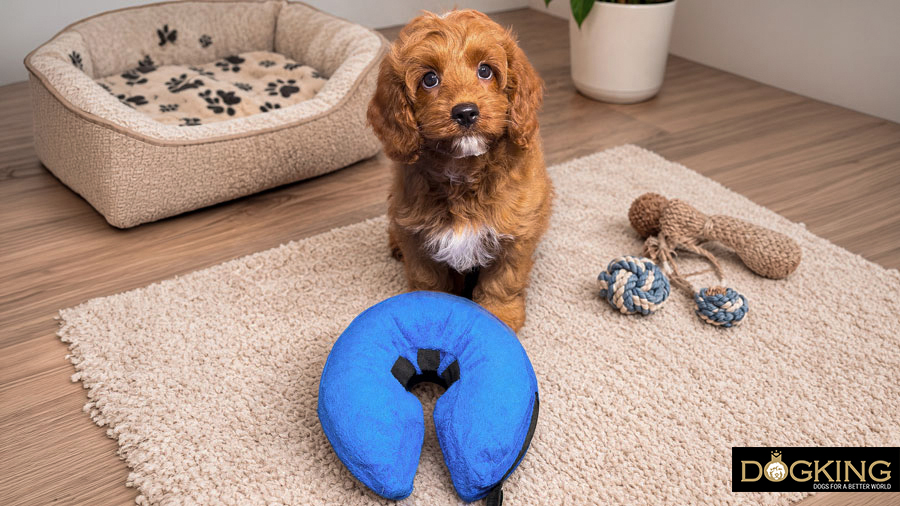
In short, the Elizabethan collar can be somewhat controversial due to the limitation of movement it imposes on the dog, although in many cases, its placement is very useful and, if managed correctly, we can minimise the impact on our pet's life. If your dog needs an Elizabethan collar, we recommend that you consult your vet if you have any doubts. Be sure to monitor your dog to see how they react to this new accessory (if they accept it or try to take it off, if they is anxious, aggressive or depressed) and be understanding and affectionate with them during these days.
The period of use of this collar does not usually exceed 15 days, although it is up to the vet to prescribe it, but it is normal that during this time your dog will be a little down or sensitive to noises, even more fearful (bear in mind that some models block their peripheral vision, so they will not see well if you approach them in a fast movement). Give your dog lots of cuddles these days and don't forget that the purpose of these collars is to help them recover and prevent their wounds from getting worse or infected. Lots of encouragement!