How to protect your dog from the sun
Avoid heat stroke, burns and dehydration in your pet.
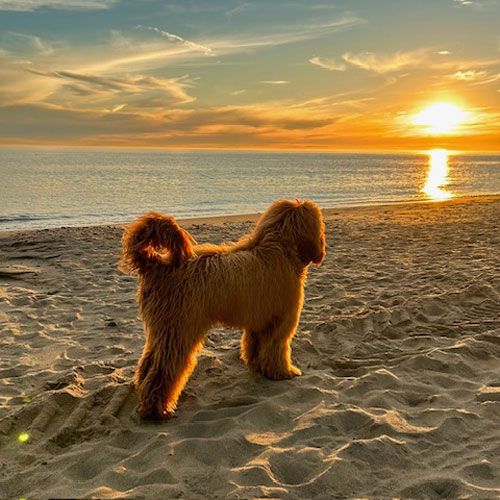
ARE DOGS HOT?
Approximate reading time: 8 minutes
In spring and summer (or in autumn and winter if you live in the southern hemisphere) temperatures start to rise, and depending on the climate of each area, they can reach extremely high values that not only affect people, but also our dear friends the dogs. Although these animals have natural protection from the sun and heat — their coat of fur and perspiration through panting and pads — they can of course suffer many problems with intense sun exposure or high temperatures.
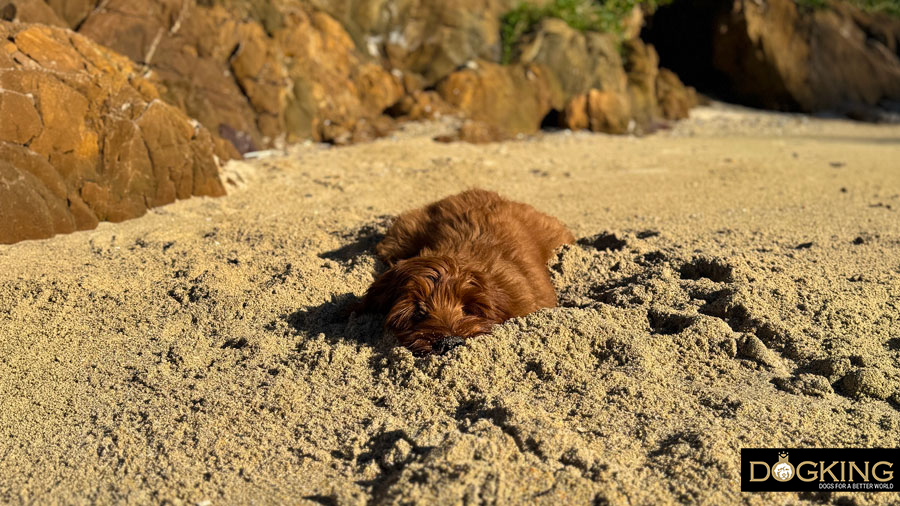
In addition, dogs are not known to regulate their body heat as easily as people, so it is very important that you help your pet stay cool and hydrated to avoid dangerous heat stroke, skin burns and dehydration. If you're wondering how to protect your dog from the sun and heat, here are some tips so you can continue to enjoy the summer together safely. Here we go!
Table of contents
3. Protect your dog from high temperatures
4. Take care of your dog's pads
5. Brush their coat, but don't shave it!
6. Yes to baths with your dog!
Hydrate your dog
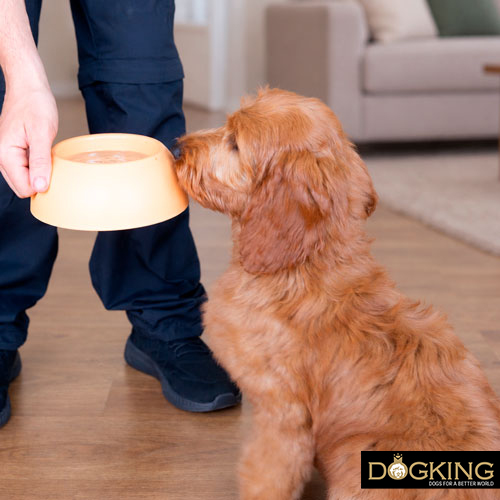
It's obvious: the hotter and sunnier it gets, the more dehydration. That's why, in these hot months, you'll need to make sure your dog drinks plenty of water. To do this, place several containers of cool water around the house, so that they always have the opportunity to refresh and hydrate themself. Change the water frequently to keep it clean and appealing to your pet. You can make homemade dog ice cream to surprise your furry friend with. Just cubes of some dog-safe fruit (such as apples or strawberries) mixed with lactose-free yoghurt - they'll love it! Oh, and when you're out and about, especially on long walks or hikes, make sure you always carry a bottle of water and a portable water bowl.
Sun protection for dogs
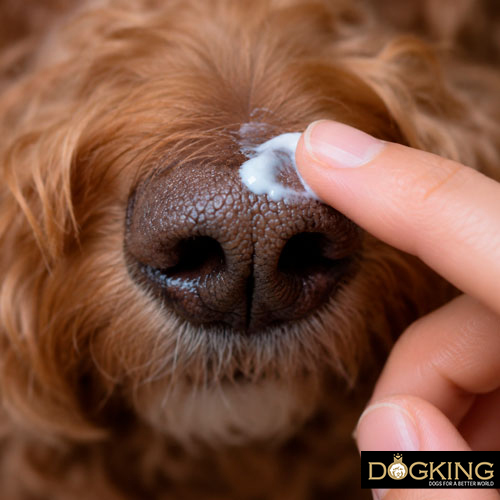
Dogs are also sensitive to the sun's UV rays. So, although it may come as a surprise, they need to be protected with specific products. Canine sunscreens, like the ones we use on people, block sun damage, taking care of your dog's skin and preventing them from getting sunburn when they are outdoors. These sun protection products for dogs should be applied to areas where there is less hair and therefore less natural defence against the sun, such as the nose, around the mouth, ears, abdomen, groin and eyelids. If your dog has short, fine or white fur, don't hesitate to apply this protection whenever you go out for a walk. But choose a quality formulation that does not contain zinc or harmful chemicals. You should also protect your furry friend if they get sun through a window.
Protect them from high temperatures
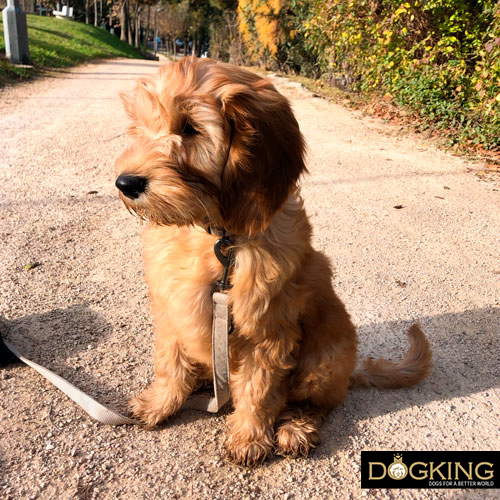
People can choose not to go outside on hot, sunny days, or drive around in the car to avoid the high temperatures. However, your dog has to go out for a walk and relieve themself. If the heat is very intense, try to take them out early in the morning and late in the afternoon for long walks, and in the central hours of the day look for shady and breezy areas, whenever possible, and take them out for short walks just to relieve themself.
At home, place their bed in as cool and ventilated a place as possible. Be aware of the path of the sun in your home so that your dog does not get direct sunlight at any time, especially if you are not going to be home to see it. Of course, it is strongly discouraged to leave your pet locked in the car, where the temperature can be twice as high as outside and rise rapidly, potentially endangering your dog's life. In short, try not to expose your furry friend to direct sunlight and high temperatures to avoid heat stroke. Symptoms of heat shock include excessive and constant panting, lethargy, vomiting and respiratory problems. If you notice these signs in your dog, seek urgent veterinary care.
Take care of their pads
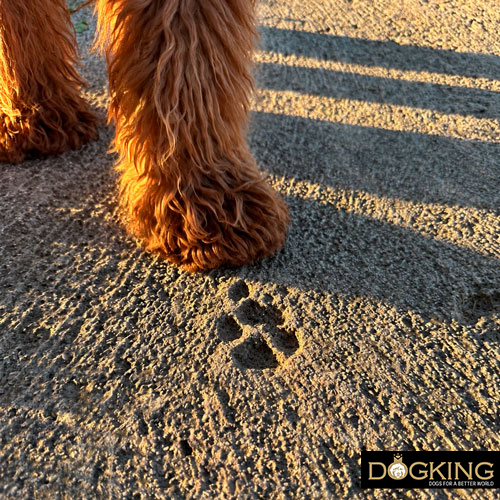
Can you imagine walking barefoot on asphalt in 30+ degrees? Well, that's what your dog does every summer day when you go for a walk. Although their pads are quite resistant, if the temperature of the ground is too high due to the sun and heat, they could suffer from burns. For this reason, we recommend you apply the classic trick of touching the ground with the back of your hand: if you can't stand it for 5 seconds without getting burnt, then neither can your dog. For these cases, there are pad protectors, a kind of dressing that sticks to the dog's paw prints. Protective creams and sprays are also available. In any case, keep an eye on this part of your dog's anatomy that is so exposed to the sun and high temperatures. Always look for grassy or dirt areas, which are not as hot as concrete or asphalt. In addition to all this, complete the care of your dog's pads with moisturising products to repair the skin in this area.
Brush their coat, but don't shave it!
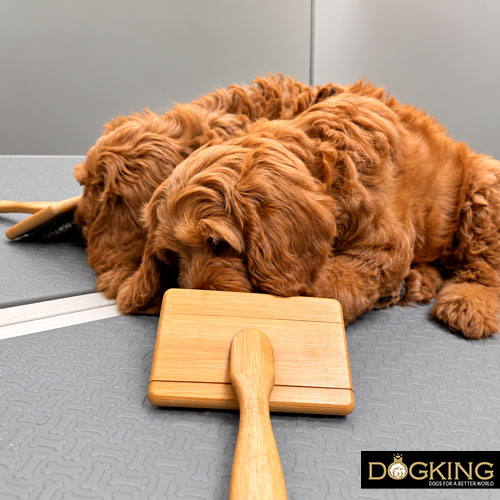
Even if you're tempted to shave your dog's coat to keep them cooler, don't do it! A dog's coat, specifically the top coat, is his protection from the sun's rays, heat and also insects. If you shave your dog's coat, their skin will be totally exposed and they could suffer from burns, among other problems. In pets with very long, lush fur, it is a good idea to trim the fur a little, but never to shave it completely. In some breeds of dog, the technique of de-shedding is practised, which consists of removing the undercoat, leaving the top coat intact to protect them from the elements. In other dogs, such as the Austrlaian Cobberdog, which do not moult, de-shedding is not practised, but under no circumstances should the hair be shaved, as this would leave the animal's skin completely unprotected. What we do recommend in summer is to brush the dog's coat more frequently, as this will keep the coat oxygenated and our furry friend will be able to fight the sun and heat much better.
Yes to baths with your dog!
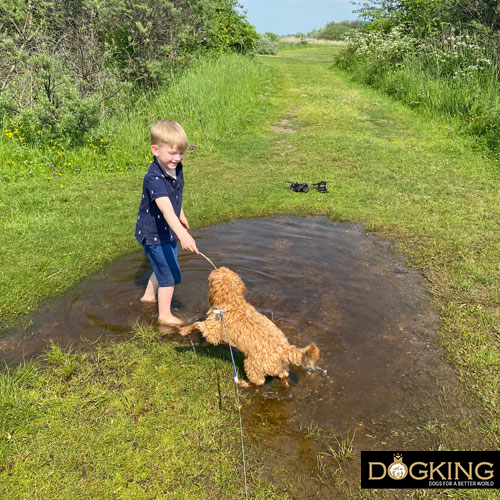
One of the most fun and infallible ways to refresh your dog is by soaking them. Whether it's a shower of water with a hose (at low pressure so as not to hurt or frighten them), a dip in the pool or a swim at the dog beach. Preferably choose calm currents and always supervise your dog during the bath. For them to relax and enjoy the water, it is best to get them used to it as a child, and if this is not possible, always do it gradually, from less to more. However, bear in mind that not all dogs like to bathe or get wet, so don't force the situation if your pet shies away from water. In any case, you can always dampen a towel and pat them on their tummy and pads to soothe their heat.
High temperatures and intense sunshine can cause your dog to suffer from sunburn, heat stroke and other problems. However, if you protect them with the right products and practices, you can enjoy the summer together. Pay special attention to your dog's heat symptoms if they belong to a breed with a flat muzzle (such as bulldogs, pugs or boxers) or if they have a very dense coat (such as a husky). And have fun!