How to teach my dog to sit
This basic training exercise is very useful to educate your dog.
THE IMPORTANCE OF TRAINING YOUR DOG
Approximate reading time: 8 minutes
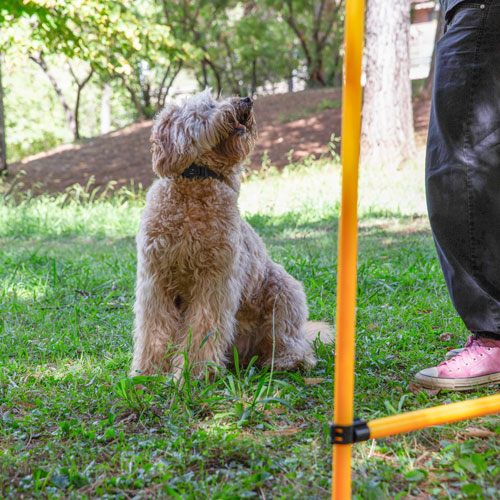
When we talk about dog training, many people think of dogs performing complex exercise routines or even participating in professional competitions. But the reality is that, although with time and patience you can train your dog to the level you want, by teaching them a few basic exercises you can already see the benefits in their behaviour and in the way you live together. But not only that, a trained dog is, objectively, a happier, more balanced, motivated and relaxed dog. They know what is expected of them and enjoy doing it. At the same time, working on your pet's obedience through training will keep them safe in different everyday situations, whether on the street or at home.
Among the basic dog training exercises, one of the first ones recommended is that the dog learns to sit. From this practice, other types of exercises can be trained, so it is one of the first signs that should be taught to the animal.
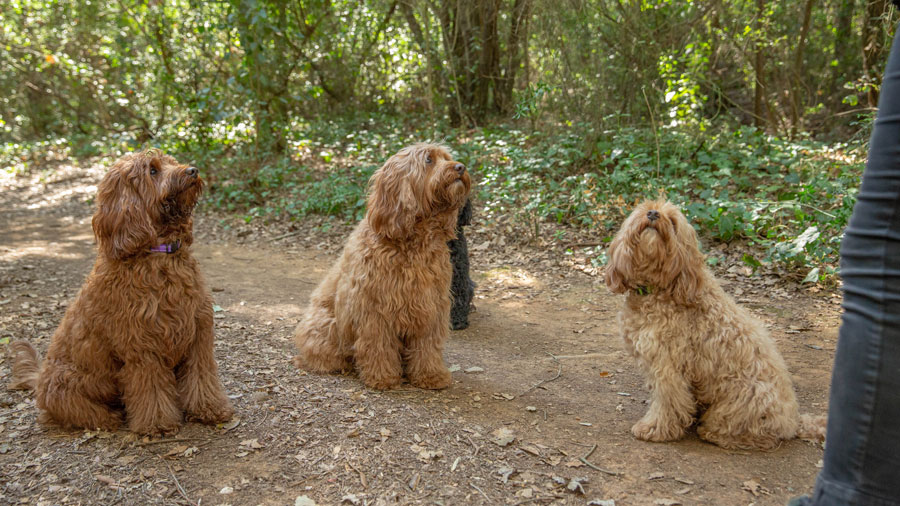
Table of contents
1. Advantages of getting your dog to sit on command
Advantages of getting your dog to sit on command
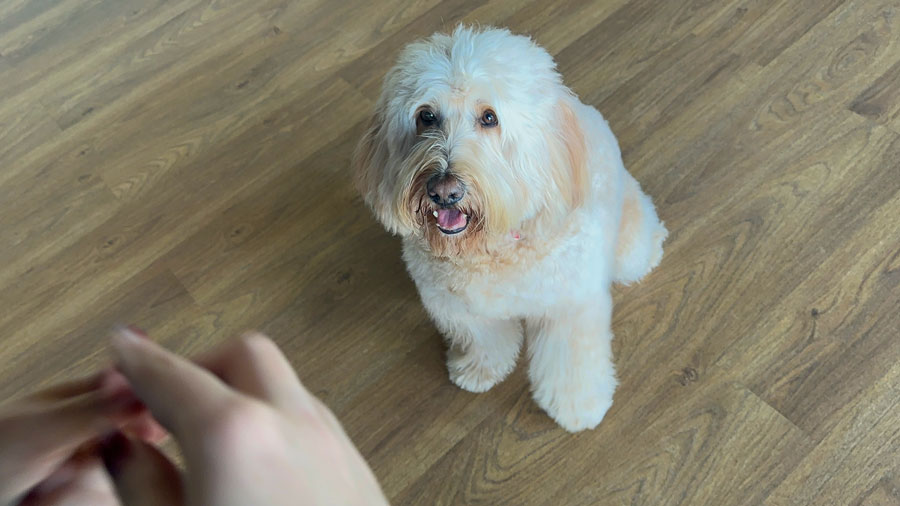
Getting your dog to sit on command is a very useful exercise and one that is often taught to dogs first, partly because it is relatively simple, but also because it serves as a starting point for other exercises. But what is the point of having your pet put their bottom on the floor when you ask them to do so? Here are some of the advantages of your dog learning to sit on your signal.
- It allows them to abandon behaviours such as jumping up to greet you, which can be uncomfortable for some people.
- It teaches them to wait and pay attention to you to work on all kinds of signals.
- Helps them calm down in stressful situations when their energy is overflowing.
- It makes it easier for you to keep them under control when they encounter another dog, a child or anything that attracts their attention, avoiding tense or dangerous situations.
Teach your dog to sit one step at a time
As we said, the sit exercise is one of the most basic exercises you can practice with your dog, as well as being really useful for obedience training for other learning processes. To teach your furry friend to sit, all you need is a quiet, familiar space, a reinforcer to reward them so that they associate the exercise with a positive stimulus, and a lot of patience. Let's get to it!
The importance of context
Since learning to sit on command is one of the first exercises, if not the first, that your dog will internalise in their training process, it is very important that you make things easy for them to start with. For this reason, we recommend choosing a quiet, distraction-free space that is familiar to your pet, such as a quiet room in your house. Later on, we can generalise this exercise so that it can be carried out in any context, but at first we need an environment with few stimuli to encourage the dog's concentration and allow them to progress in their learning process without becoming frustrated. In addition, we recommend that you place a bowl of water in the training area so that your dog can drink whenever they want during the exercise.
Choose the right reward
To fix the learning of the “sit” signal in your dog, we will work with a reinforcer that will help them to associate the exercise with something positive for them. For this we can use primary reinforcers, such as food or treats, but also secondary ones, which could be toys, stroking or words of congratulations. The choice of one reinforcer or another will depend on the context and your dog's tastes. For example, if your pet has just eaten, a food-based reinforcer may not be as appealing. If they are in a play context, they will probably be more interested in one of their favourite toys than a piece of food.
The one thing you need to bear in mind is that the more difficult the exercise is for your pet, the more attractive the reinforcer needs to be. Therefore, generally speaking, when a dog begins to learn the first sit cue, it is recommended to reward with a primary need-based reinforcer, such as food or treats.
Work with luring
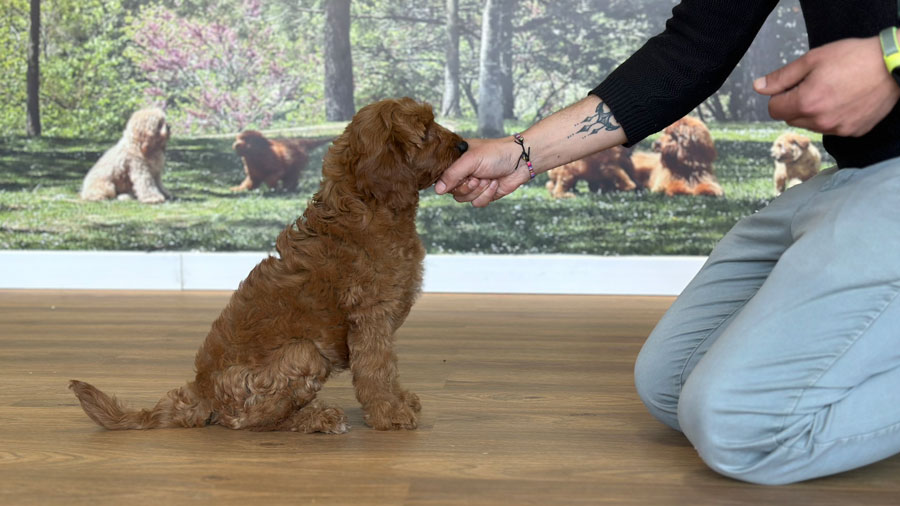
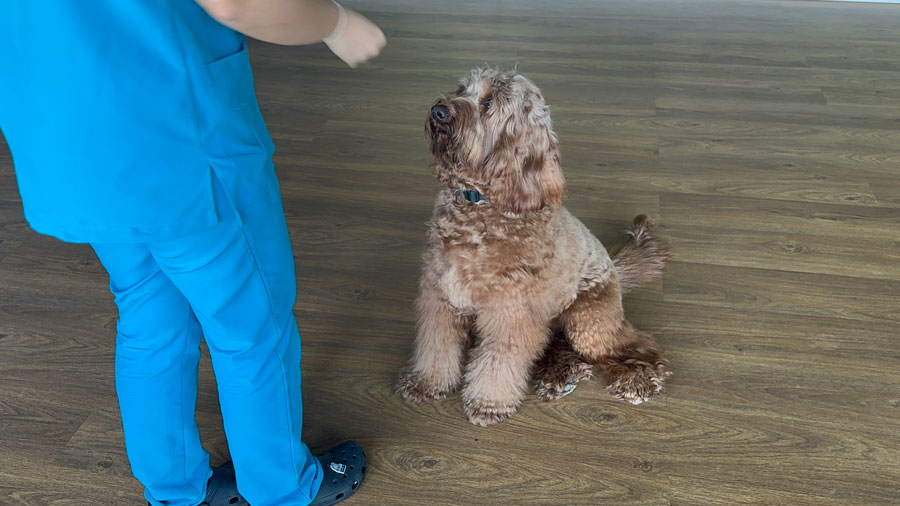
Luring is a training technique that allows you to use the reinforcer to guide movement and positively reward the dog during practice. To teach your dog to sit, place the lure, in this case some food, in your closed fist, but not before showing it to your furry friend. The aim is for your dog to concentrate on what is inside your hand and you can use it to make a gesture that will guide them to sit.
To do this, let your dog sniff your fist briefly, then move your arm up and back so that they follow your lead. This way, your dog will end up resting their bottom on the floor, and it is at this point that you should give them the signal “sit”. This is also when you should reward them by opening your hand and letting them take the food. The trick is to repeat this exercise many times. Once you have rehearsed it enough, your pet will associate that when they sit, they receive a reward that is also associated with a specific gesture. In this way, over time you will get them to sit every time you ask them to do so without the need for a reward, and even without you having to give them the verbal signal, as by simply making the gesture with your fist they will understand what you are asking them to do. Keep in mind that dogs are animals that communicate a lot posturally, and they watch us carefully, learning from our movements and gestures.
Progress little by little
One of the most common mistakes when teaching a dog to sit is to try to progress too quickly. In this sense, keep in mind that, for training to be effective, your dog must be highly motivated at all times. Key to this is avoiding a sense of frustration, which is likely to arise if you increase the difficulty of the training too quickly.
Therefore, it is best to start practising the “sit” cue at home. Once you have managed to do two training sessions without failure, you can practise in the garden, garage or somewhere in between the house and the street. Later on, you should go outside, looking for quiet areas, and gradually increase the difficulty of the exercise by practising it in spaces with more and more people and stimuli. What we are looking for is to achieve the generalisation of the sit signal, so that the dog obeys us in any place and context, but for this we have to be prudent and advance slowly.
Don't exhaust your dog
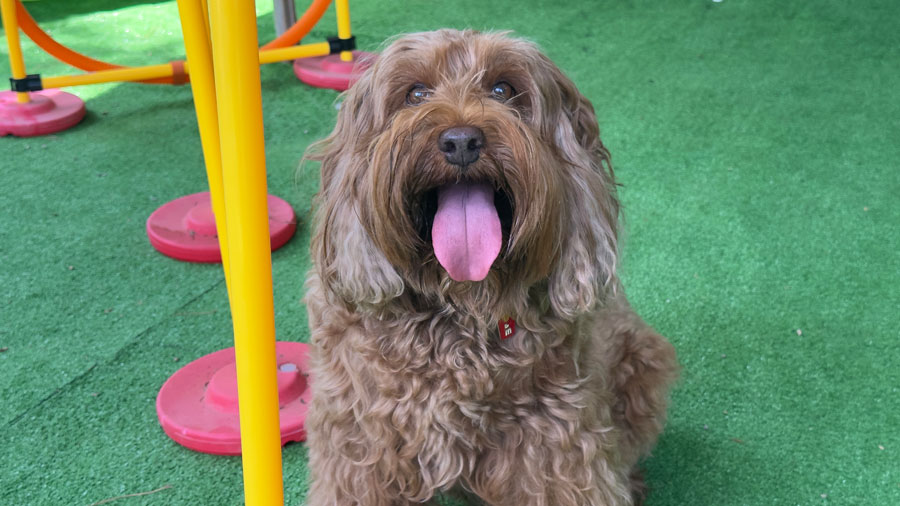
As we pointed out earlier, it is important that your pet is always motivated in any training practice, so we recommend that you set short sessions to start with, no more than 5 minutes, offering 3 minutes of rest before continuing with another 5. The first few days, 10 minutes of “sit” practice a day will be enough, but later on you can advance to 10, 20 or 25 minutes. Remember to end the training before your dog gets tired or distracted, leaving them wanting more. That way, the next time you train, they'll have a good memory and feel more motivated.
Remember that training should be an enjoyable process for your dog, so never pressure, scold or punish them, as this will make it impossible for them to learn and will only make them more frustrated. With patience, time and a lot of love, you will get your dog to sit on your signal, and you will be able to move on to other more difficult exercises. Courage!