How to teach your dog to lie down
This training exercise will help you to calm your dog down.
BENEFITS OF DOG TRAINING
Approximate reading time: 8 minutes
Dog training is not just about practising fun tricks with your dog. You need to know that training your dog brings numerous behavioural, emotional and cognitive benefits. In fact, you can teach your dog some basic notions of training from the time they are a puppy, always adapting the routines to their age and respecting their learning times. Thanks to training, your dog can improve their intellectual development, combat stress and anxiety, avoid behavioural disorders, combat obesity and feel more stimulated at all levels. This, of course, has a positive impact on their physical and mental health, greatly improving your dog's quality of life.
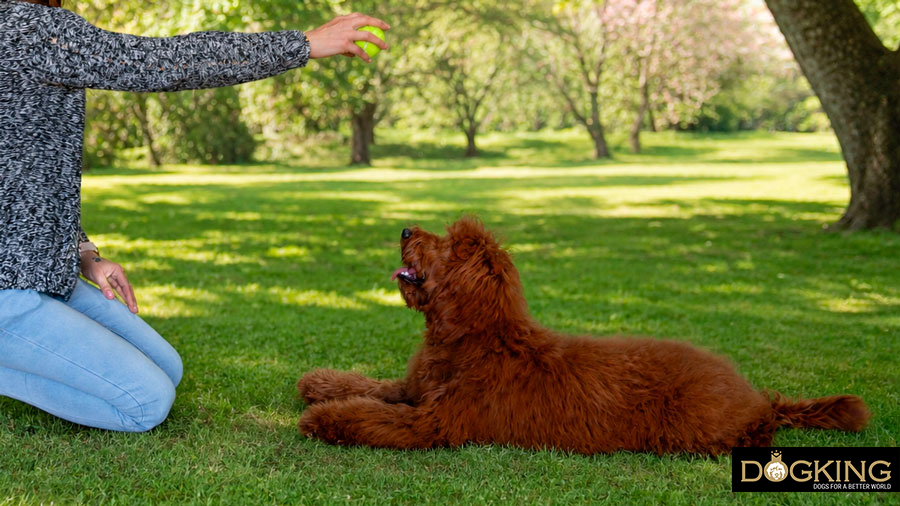
One of the most useful signals you can work on with your best friend is the ‘lie down’ signal to get him to lie down and calm down at any time and in any situation you ask him to. To teach your dog to lie down, it is best to practice the ‘sit’ exercise with him first, as it will be much easier to work with him from this position.
Table of contents
1. Why teach a dog to lie down?
2. Step-by-Step to teach your dog to lie down
Why teach a dog to lie down?
If your dog has already learned to sit on command, you may ask why you need to teach them to lie down. The ‘sit’ and ‘down’ signals have similar goals in terms of getting the dog to stop what they are doing and gaining more control of the situation. However, when we ask the dog to sit, we usually do so as a preliminary to some kind of action: giving a treat, putting them on the lead, showing them an exercise or asking them to wait for us.
On the contrary, when you tell your dog that you want them to lie down, you want them to relax completely in a position that, although it is natural for them, also puts them in a more vulnerable situation. This is why getting your dog to lie down when you tell them to can be difficult, but with time, patience and positive reinforcement you can make it happen. Teaching your dog to lie down on the floor when you tell them to can be very useful in situations where they are too nervous, if you want them to relax next to you while you are having a drink on a terrace, or if you want to prevent them from coming to the table to ask for food or greet guests.
Step-by-step to teach your dog to lie down
Before teaching your pet to follow your ‘down’ cue, we recommend that you set the ‘sit’ exercise very carefully. To do this, always starting in a calm environment, work with the luring technique and show your dog your hand with the reward you have chosen. Then, make a fist and when they sniff it, quickly gesture upwards and backwards so that your dog follows and sits automatically. At this point, give them the ‘sit’ signal and offer them the treat. Work this exercise many times until your dog has internalised it and does well in different contexts, including the street. Don't forget to progress slowly to avoid frustration, which can damage confidence and therefore learning. Once you get your dog to sit whenever you ask them to, start teaching them to lie down by following these tips.
• Create a pleasant space
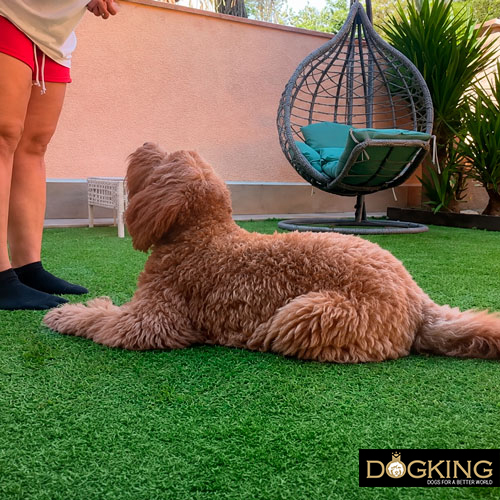
Whenever you want to introduce a new cue and have your dog learn it, we advise you to start rehearsing at home, preferably in a comfortable, quiet space with no distractions. Starting to learn at a low level of difficulty increases your dog's adherence to the practice, avoiding failure and subsequent frustration. Put out a bowl of water to cool them down when they need it, and let's get to work!
• Offer a lure
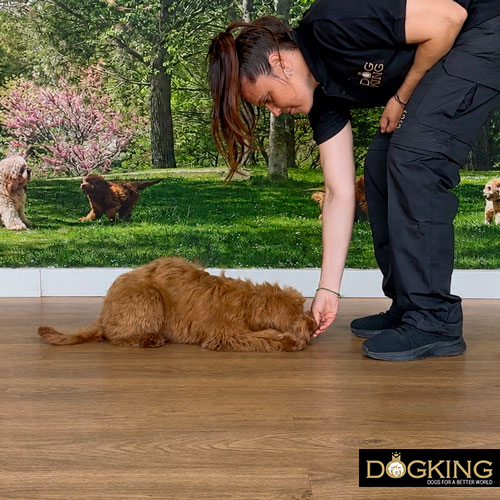
The luring technique consists of using a lure to guide the dog's movement and, finally, rewarding them for their success. First of all, you must choose a reinforcer to work on the ‘lie down’ signal with your dog. This can be a staple, i.e. food (food or treats), or you can also use toys or reward with petting. Choosing a good positive reinforcement is very important, so think about what your dog likes best, whether they are hungry or full at the moment and choose a reward that really appeals to them to start the training. Gradually, as your dog internalises the lying down exercise, you can increase the difficulty by working with less attractive rewards. But don't forget to take it one step at a time to avoid frustrating your dog.
• Work with your gestures
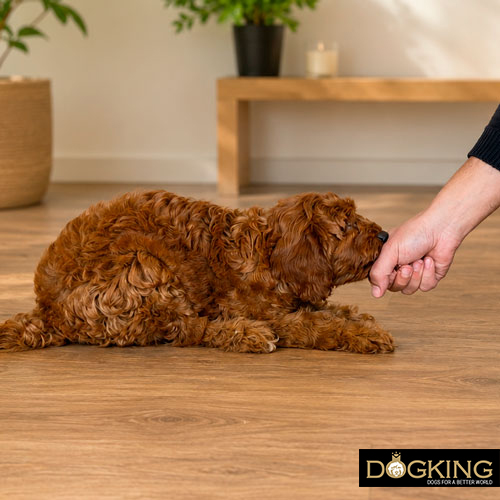
Although smell is a dog's most developed sense, sight is the one they use most to communicate with us. So, although you can start teaching your dog to lie down with the ‘lie down’ signal, the aim is that, with just a gesture, they will understand that you want them to lie down on the floor and they will do it. To do this, ask your dog to sit and, from this position, offer them your closed hand with the treat in it. When you have their attention, lower your fist to the floor and you will see that, in order to follow your movement, your dog ends up lying down. This is when you will say the ‘down’ signal and positively reinforce. Repeat this exercise until your dog understands completely and responds to your signal without the need for a reward. Gradually, you will see that your pet no longer even needs the verbal cue and, on seeing your gesture, will lie down immediately. To make it even more intuitive, you can add an index finger pointing down to use this simple gesture in everyday life when you need your furry friend to lie down.
• Patience, desire and time
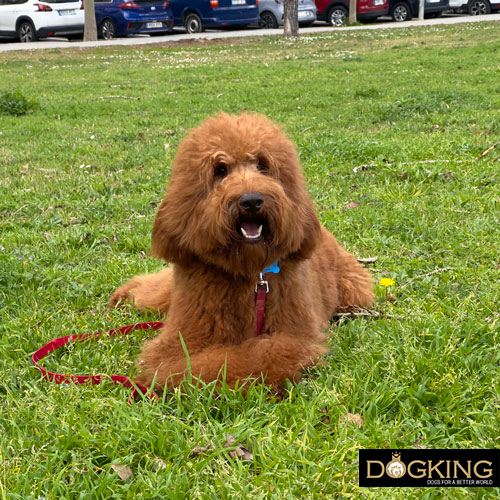
If you want your dog to learn to lie down on command, forget about rushing. Training should progress from less to more difficult, and the more difficult the exercise, the more interesting the reward should be to keep your dog motivated. To prevent them from getting too tired and losing interest, it is best to keep training short, 10-15 minutes at intervals of 5 minutes at first, with short breaks of 3 minutes. Gradually work your way up in terms of time and difficulty, but if you notice your dog getting stuck, go back. Never go to the next level if your dog has not fully internalised the previous exercise. For example, if your dog still sometimes hesitates when you ask them to lie down at home, it won't help if you try it outside, with lots of stimuli and distractions around. You can also try changing the reinforcer to something that is of more interest to your furry friend.
Above all, keep in mind that every dog is different, and depending on their breed, personality and energy level, the process of learning to lie down on command may take longer or shorter. Australian Cobberdogs, for example, are very flexible and therefore very easy to train. They learn very quickly due to their strong connection with people and their calm demeanour.
Of course, if you want to teach your dog to lie down, forget about punishments, scolding or shouting. The only way for your dog to learn is positive reinforcement, so never penalise their failures and, on the contrary, reward their successes so that they associate the action you are working on with something very pleasant and positive for them. Good job!