Home > Living With A Puppy
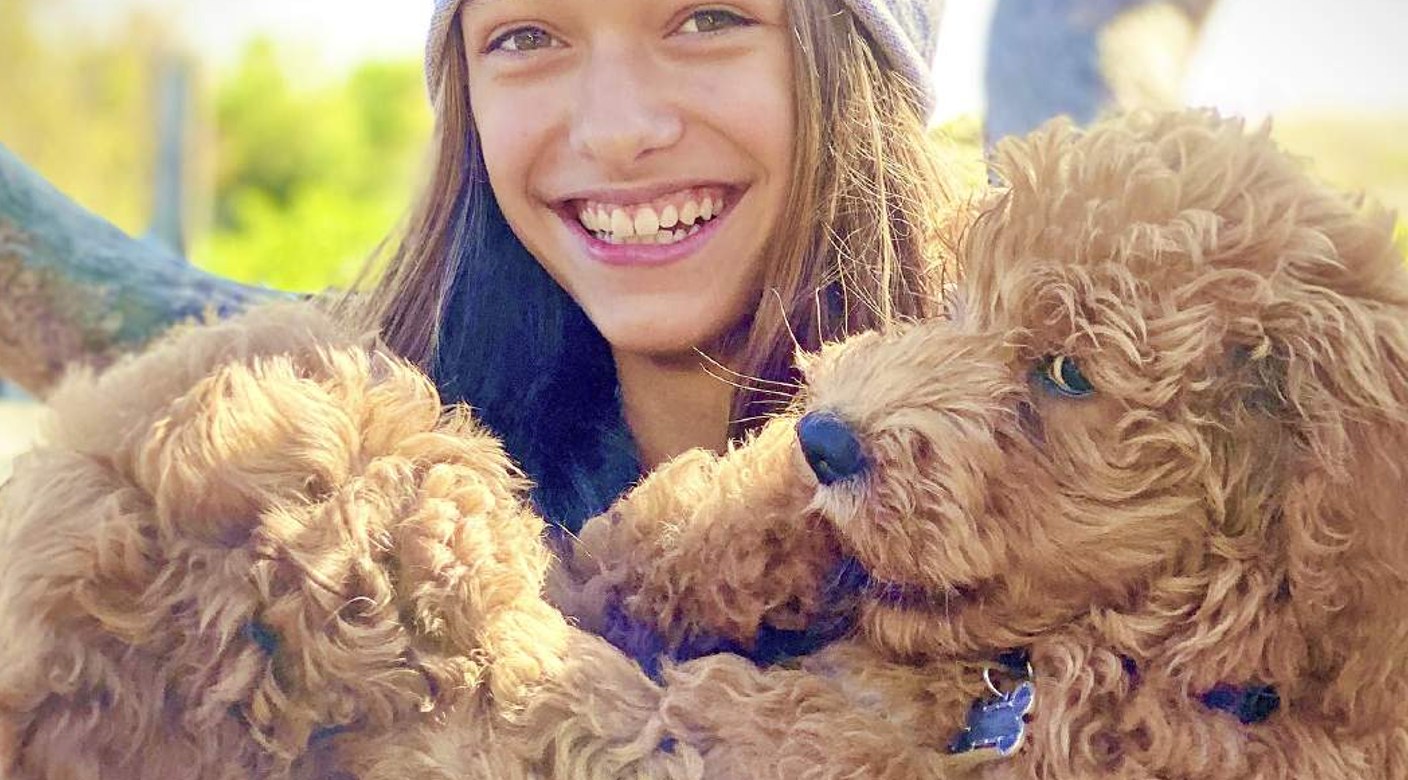
We are delighted that you are considering our centre as the place to acquire your puppy. There is no doubt that sharing your life with a dog is a wonderful experience, but if you have never had a dog before, or it has been a while since you cared for a puppy, you will have plenty of questions now that you are thinking about adding one to the family. In this guide you will find some tips and recommendations that will help you understand what your future puppy needs and make the decision to welcome a new member into your home.
Why bring a dog into the family?
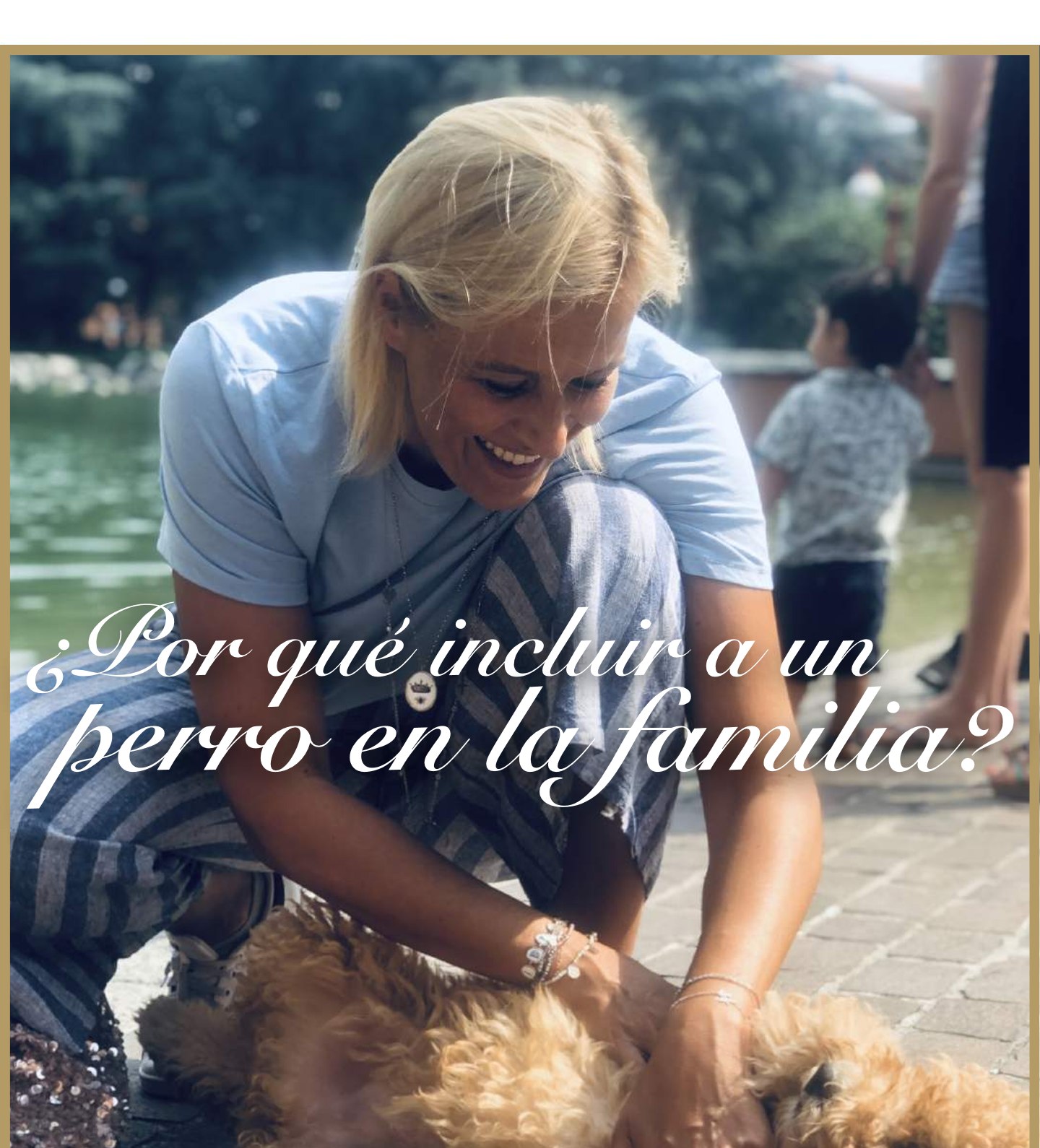
The positive influence of pets on human health and wellbeing is widely recognised. The companionship of pets has been identified as a protective factor against cardiovascular disease and a way of reducing their owners' stress: they provide psychological support, reduce the feeling of loneliness and enable their owners to interact with the social environment around them.
Many cultures are increasingly integrating the dog as a fundamental part of their society. This is reflected in the growing number of households that include the dog as part of their family.
Statistics show that one in four households in our country is home to a dog. Of the total population, 43% live with a pet, 76% declare themselves unconditional lovers of companion animals —even if they have not yet decided to bring one into their lives— and 74% say that sharing their existence with them makes (or would make) them happier.
The need to enjoy affectionate relationships is fundamental to our quality of life, and dogs are another such emotional bond. They let us experience the sense of fulfilment that comes from loving someone and the satisfaction of feeling that this love is received with gratitude.
Dogs as companions for adults make a huge difference between living alone and living with a pet, as they make us feel responsible for another living being, keeping us active and happy. For children, dogs teach them the value of respect and responsibility, learning to care for animals in a respectful way.
They provide companionship, they are loyal and they allow a healthy exchange of affection, but they also need care. And those duties of grooming, feeding or trips to the vet are beneficial both for them and for their owners. This is especially true in the case of older people, as it obliges them to stay active, since they have to care for the dog, groom it or take it out for a walk. These duties can also be very healthy for people who feel lonely: someone living alone has someone to talk to or to praise when they do something well.
And, in the case of the youngest members of the family, it also helps them develop respect, empathy and sociability. It shows them that they can care for someone, that they can take on a responsibility, that they are capable. And a dog can also strengthen a family: it can play a very important role; if one of the children feels a little lonely, they can find comfort in the dog. Or, if there is a bad atmosphere at some point within the family, the dog naturally does something that helps ease the tension.
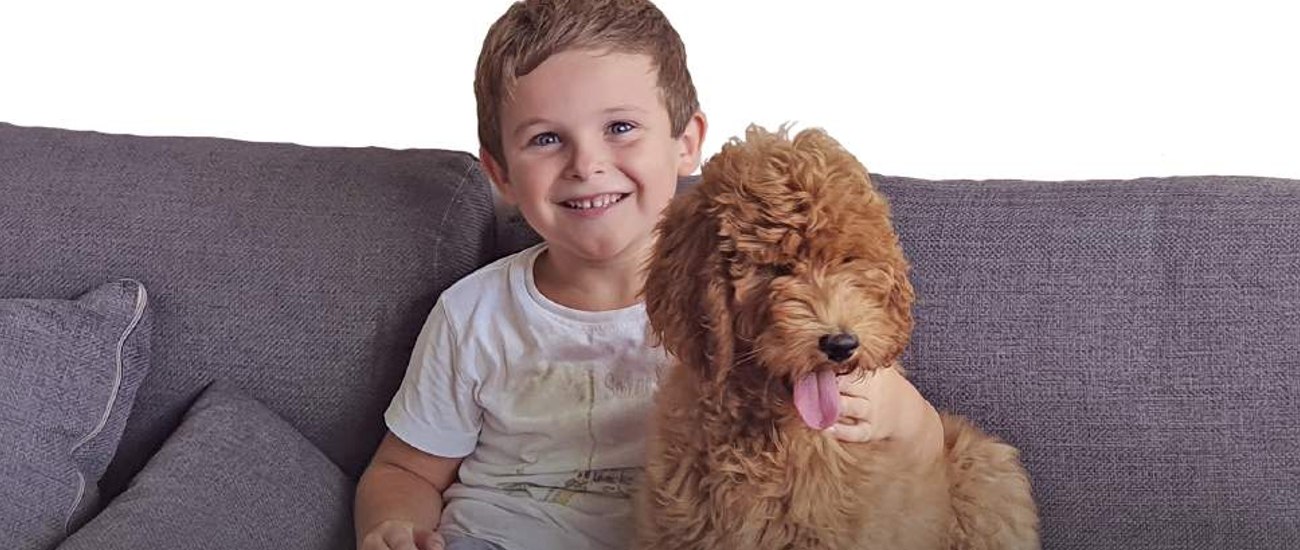
The psychological benefits of companion animals are stronger when the person feels great affection for the animal. According to numerous studies, people who have a better relationship with their pets show better mental health and fewer physical symptoms of illness. This demonstrates that the compatibility between animal and owner is key to enjoying the psychosocial benefits of relationships with companion animals.
Get to know the Australian Cobberdog better

The Australian Cobberdog is a great family dog, although the breed was developed to achieve the optimal characteristics to carry out an excellent role as a therapy and assistance dog. It is a dog with the ideal energy to provide assistance and with great intelligence to learn how to do its job, and it is hypoallergenic. It also shows great sensitivity towards children and the elderly.
The character of the Australian Cobberdog
The Australian Cobberdog is a balanced and highly intelligent dog. It loves to learn new commands and tricks and is always eager to please. One of the characteristics that best defines it is its tendency to always seek out the gaze of the person, as if trying to read in their eyes what is expected of it. It is a sensitive dog, with a great ability to perceive moods, or to quickly understand which people it should be more careful with, whether a small child, an elderly person or someone with limited mobility. This is due to its respectful and never overbearing character, which is so beneficial in therapy with people who have interaction difficulties.
An Australian Cobberdog in the family
Without a doubt, something that has made it very popular among families is that the Australian Cobberdog makes the task of having a dog much easier. To begin with, as it does not cause allergies, it can live with any family without the need to use products or medicines to prevent constant sneezing and itching. In addition, this goes hand in hand with the fact that they do not shed their coat, which puts an end to the typical nuisance among pet owners who always find a hair on their clothes. Likewise, there is no need to keep sweeping the house repeatedly (and even more so during the shedding months). On the other hand, the character of the Australian Cobberdog and its incredible tolerance make it a wonderful dog to live with the youngest children or people with special needs.
The Australian Cobberdog away from home
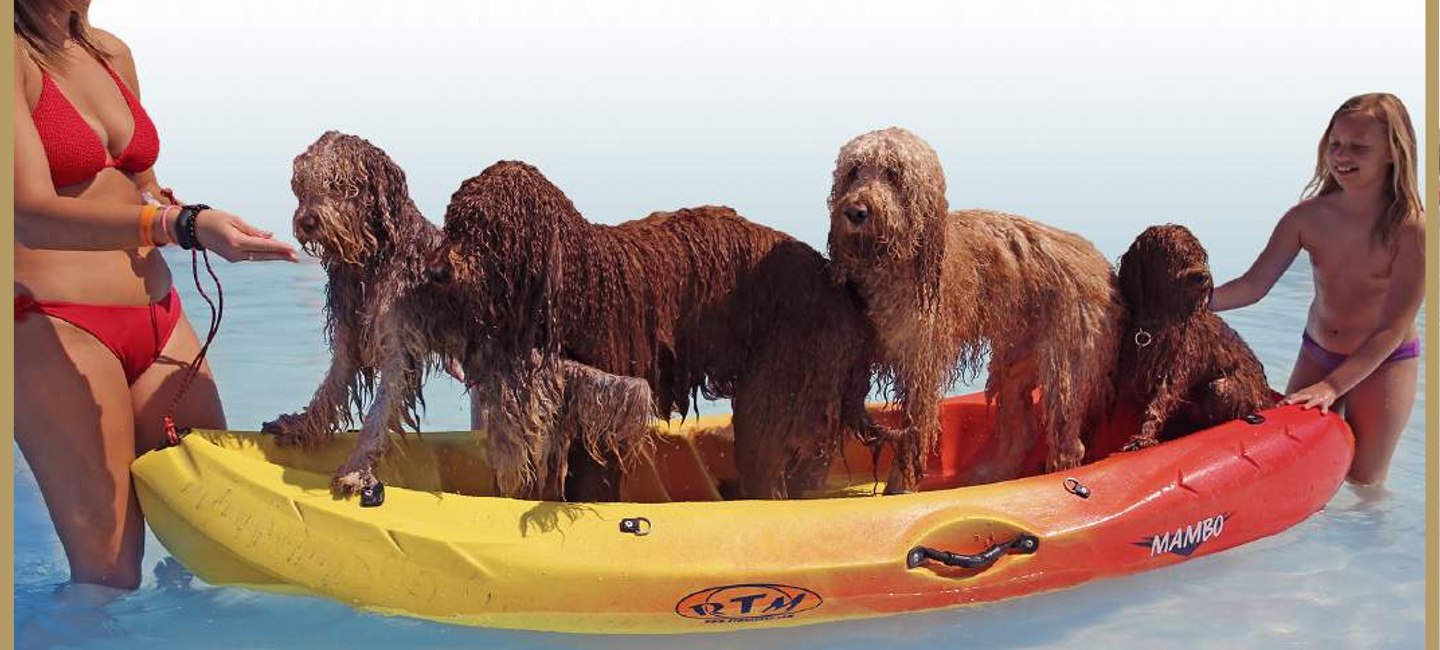
The Australian Cobberdog is a wonderful dog for activities away from home. It has great energy to endure long exercise sessions and greatly enjoys taking part in family activities. It especially loves water and will take any chance it gets to have a dip. As for routines, the Australian Cobberdog needs about 3 walks a day. On its walks it is good to allow them to socialise with other dogs, since the Australian Cobberdog adores playing with other dogs and feeling accompanied. A little game with the ball will give it the exercise it needs and will help us create a bond, something very important for this breed, which needs to feel connected with its family.
Care guide for your puppy
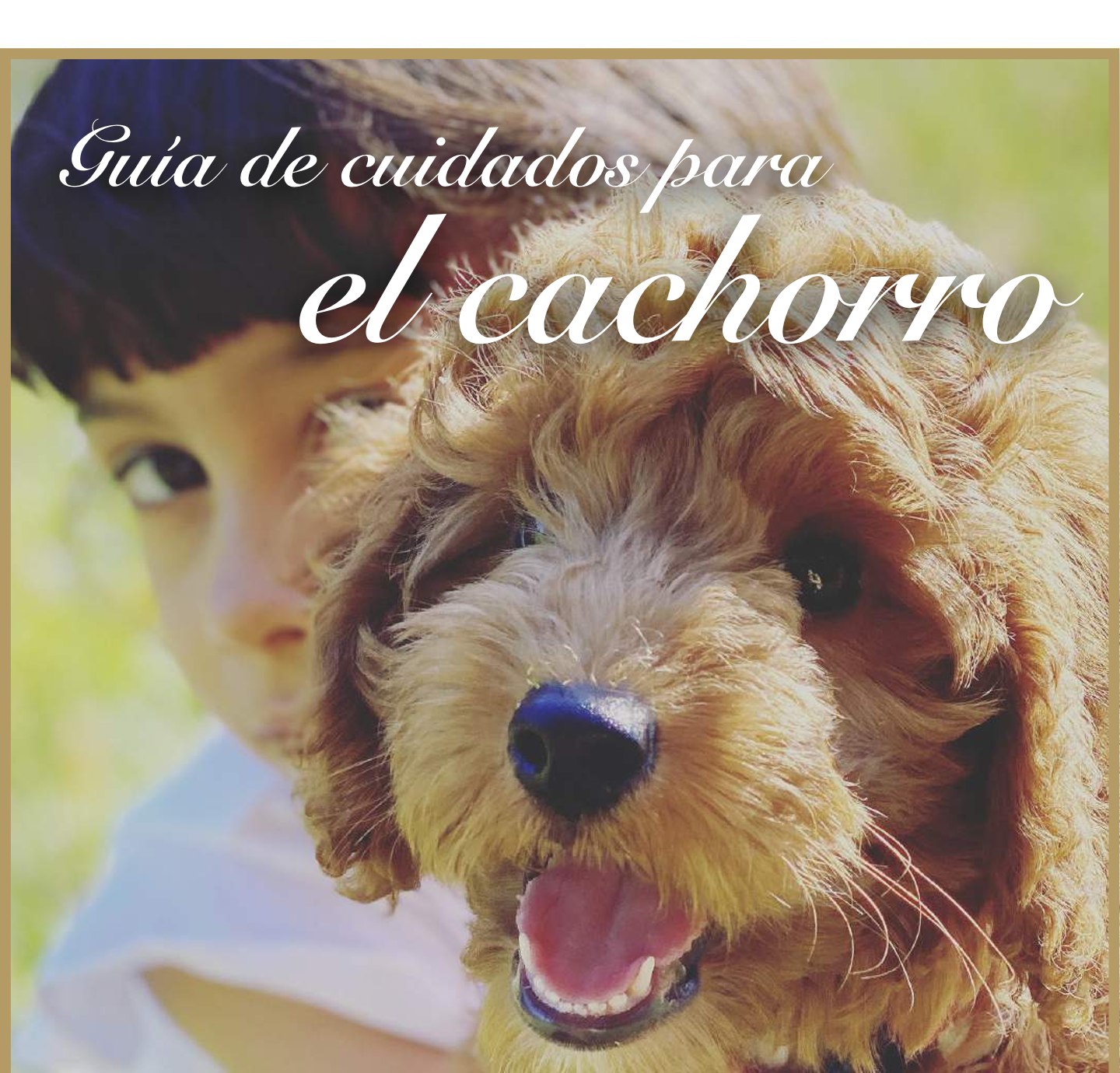
There are great benefits associated with living with a dog, but being a responsible owner begins with being aware that it is a lifelong commitment. At DOGKING we believe that this commitment should be as strong as the one taken on when you have a child. The option of abandoning it or giving it up should never be considered. A dog should be acquired under these premises, which is why it is a decision that must be taken seriously. The dog needs a great deal from us, they are completely dependent, and the responsibilities we have towards our dog are simply unavoidable. That is responsible ownership.
Feeding
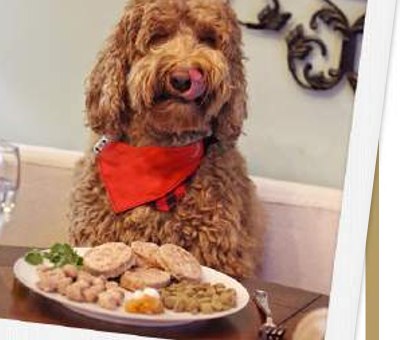
We recommend feeding the puppy a high-quality natural diet. From 2 to 5 months of age it is advisable to split the daily portion into a minimum of 3 servings. From this age onwards it would already be possible to feed our pet twice a day. In this way we encourage the puppy to eat precisely at the moments when we offer it food, so we can control how much it eats, establish a routine and regulate its system. If it does not finish its portion, we will remove the bowl. Water must always be freely available, fresh and clean (it should be changed daily).
We should never offer leftovers of home-cooked food and we must never give it any of our food when we are at the table. Dogs do not respond well to changes in their diet, and offering it a different type of food or making sudden changes to its diet often leads to digestive disorders (diarrhoea/constipation, vomiting, discomfort).
At present all our puppies are fed a super-premium natural diet; they are used to high quality and their systems are perfectly regulated with it. So that your future puppy does not suffer digestive upsets due to a change of diet, should you wish to change its food, introduce the new food gradually, mixing it with its usual food. As for quantities, we will give you the right guidelines for your puppy; if you think you need to increase or decrease the amount, please consult its vet.
Vaccination
The vaccination period begins at around 4 weeks of age and ends at approximately 13 weeks, with vaccinations then needing to be renewed every year. Our veterinary service will tell you in each case when those vaccines can be administered. It is important to point out the importance of your future puppy not having internal parasites in the days before the vaccines so that they take effect. To verify that this is the case, faecal analyses are recommended to confirm that your puppy does not have internal parasites.
Deworming
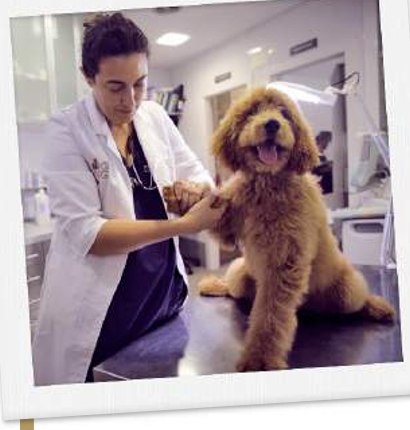
There are two types of parasites that can affect our dog: internal and external parasites. With regard to external parasites (ticks, fleas, mites, etc.) it is necessary to apply products (collars, spot-on pipettes, etc.) routinely and periodically to keep your future puppy free of these parasites. Nowadays, external parasites can be found in our country in any season, which is why deworming must be carried out all year round.
On the other hand we have internal parasites. The most common are intestinal ones, especially in puppies; for this reason deworming in all young animals is even more important. Your future puppy has been dewormed on several occasions and its faeces have been evaluated by faecal analysis carried out by our veterinary service before being handed over.
It is very important to understand the importance of prevention when it comes to protecting our dog from parasites. There is a very widespread parasite that is transmitted through mosquito bites and spreads Leishmaniasis. This disease has no cure, causes serious damage to our dog's vital organs and the mortality rate it brings about is very high. At present, prevention through the combination of a spot-on pipette, an antiparasitic collar, a vaccine and a syrup is the best measure we can take to protect our dog from this lethal disease.
Accidents
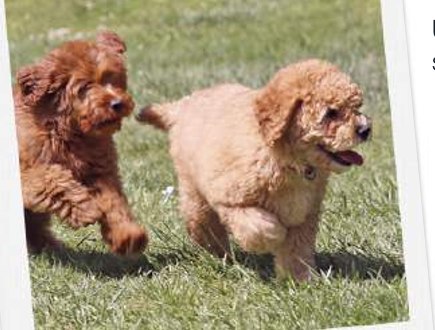
Puppies are explorers by nature and can sometimes do reckless things that could seriously harm their health. We recommend that you keep a constant eye on it, because they can easily swallow the most unthinkable objects such as stones, rags, plastics, etc. Likewise, you must avoid at all costs having electrical cables it could bite, or leaving its food within its reach. The safest thing is to offer it toys specially designed for puppies and only let it play with those. We advise against playing with sticks (which can splinter) or stones (which can break its teeth), and study carefully the toys you buy it, since those found in bargain shops often break easily and their parts can be swallowed by the puppy.
You must very carefully gauge the level of exercise you encourage it to do, since puppies do not yet have their bone joints fully formed, and it is completely inadvisable to overdo it on walks by forcing it to walk more than it should, to play roughly with it, to encourage it to jump or to lift it by its limbs. In addition, at this age they are not yet very good at judging their own abilities and can fall from considerable heights. All of this can cause injuries and trauma that affect it for life. To protect its bones, there are dietary supplements that strengthen its joints.
An intelligent way to avoid accidents away from home, once the puppy is already able to go out into the street normally, is to reinforce obedience at home (come here, sit, etc.) and to get the puppy used to walking with the lead and collar from the very first days, even inside the house; this way we will be better able to handle unexpected situations.
It is vitally important to have our puppy correctly identified so that, in case of escape or loss, its owners can be located. The most efficient way to do this is to hang an identification tag with the owner's details from its collar and register our dog in our country's companion animal identification record.
Hygiene
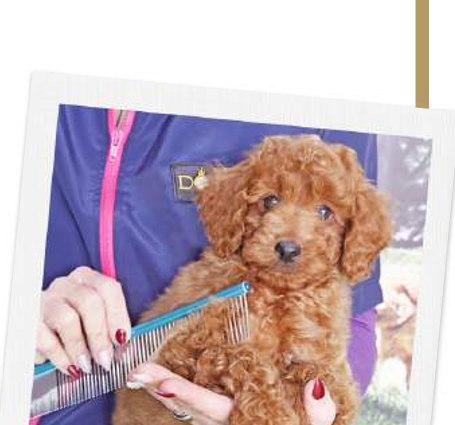
You must get your future puppy used to everything that will later be part of its everyday life, and the dog's hygiene will also be something frequent for it, so it is something we will need to gradually prepare it for. Coat care is essential, since it is its protective layer and inadequate treatment could lead to health problems in the medium or long term. Brushing is the most important thing, and each type of coat will need different care. Our team will guide you in this respect and will advise you on which type of brush is most suitable for the breed and age of your future puppy. Routine cleaning of ears, eyes (eye discharge) and teeth will also help maintain its health, not only because of the obvious effects of cleaning, but also because it will allow you to carry out a relatively frequent check of areas that can sometimes go unnoticed and that may present dermatitis, otitis, occasional skin lesions, parasites, eye diseases or dental conditions.
Other health tips
For any problem or question you may have with your future puppy, we offer you lifelong advice for your puppy. Our team will try to resolve all your concerns and issues. If any problem arises, do not wait too long to contact us; it is better to call us immediately should any problem appear, since conditions in puppies can develop quickly. Do not overlook small health changes that may seem unimportant to you. In these cases it is far more advisable to err on the side of caution than otherwise. For our team your questions are important, as they give us the opportunity to help you take better care of the puppy and create a better relationship with your dog, which is ultimately our main objective.
Adaptation
Puppies are very sensitive, and faced with stressful factors such as travel, a change of environment, diet or routines they may suffer changes such as a certain listlessness, reduced exploratory behaviour or, in some cases, diarrhoea. That is why the behaviour you will be able to observe in your future puppy during the first few days after acquiring it will not be the definitive one.
As regards diarrhoea, should it occur, do not be alarmed, it is usually normal; however, this situation must be corrected promptly, since if these symptoms persist for more than one or two days the puppy's life may be at risk. Therefore, if any of the symptoms described appear it is vital that you let us know, and if necessary that you go to the vet to avoid the worsening of a situation that probably has a simple solution.
Socialisation
Socialisation is a learning stage that lasts throughout the puppy phase of the dog. It is based on gradually exposing the puppy to new situations so that it learns to overcome them successfully, thus adopting a confident attitude free from fear or aggression and in this way developing mental mechanisms to resolve similar situations for the rest of its life. Let us say it is the puppy's preparation for its adult reality. It is considered good socialisation if the puppy learns to be on different surfaces, in different places and accepts different noises, other people and other animals without showing insecurity.
At our centre puppies begin their socialisation from the moment they are born. At first, an environment of calm and intimacy with their mother is created for them, to which stimuli are progressively added. To this end we have a socialisation programme in which they take part until they go off with their family or to a centre to be trained as therapy dogs or assistance dogs.
Reward and correction
The learning process is the same for both the puppy and the adult dog: learning by association. The difference is that teaching a puppy is usually simpler, since it has a greater ability to take in knowledge and is not conditioned by a previous experience that leads it to react in an already learned way.
Learning by association consists of the fact that if the dog does something and receives a reward it will be more inclined to repeat that behaviour (it has associated it with something positive). If, on the contrary, when it does something the consequence is negative (a correction or simply not getting what it expected, for example), the dog will tend not to do it again. A reward can simply be gaining its owner's attention, receiving a stroke, food or play. A correction can be the owner ignoring it, the dog immediately losing its owner's attention accompanied by a firm tone of voice, moving it away and denying it company for a while.
Therefore, if we want the puppy to learn something, we must reward it when it does so (remember this when you have to teach your future puppy to control its sphincters). It is very important that the dog associates what it has done with the reward, so it will have to be rewarded immediately (less than 1 minute); it will be of no use if we give the reward after that time, as the dog will not make the association. Likewise, you must avoid giving it a reward if it is doing something you do not like (if it cries, barks, bites, etc., do not stroke it at that moment).
As for getting it to stop doing something you do not like, our greatest recommendation is that you do not allow it to do so. For example, if you do not want it to bite the sofa, do not leave it unsupervised with access to the sofa. Timing is also fundamental when applying a correction: it must be immediate to its bad behaviour. That is why, if you arrive home and find that your future puppy has done something it should not have in your absence, take a deep breath. A telling-off will be of no use, as it will not associate it with its bad action —which it did a good while ago— but with your arrival, and if this is repeated it is even possible that it will avoid coming to greet you when you arrive home, as it will associate it with a punishment. Punishments are something very delicate; that is why, if you need to change your future puppy's behaviour, we advise you to get in touch with us first.
Sphincter control
In other words, control of wees and poos. It is a progressive learning process that develops as the puppy also increases its biological capacity to hold in its needs. At just two months old, its capacity to hold on will be very limited, but once it turns 5 months it should be able to control itself perfectly if it has been taught to do so. First we will teach it to relieve itself on a specific surface-texture and then we will teach it to do so outside the house.
In this type of learning we will use the technique known as "errorless learning", which means that under no circumstances should it be punished for doing it outside the space we have set out for it. We will choose a material for it to associate with relieving itself; the ideal is a training pad with a tray.
Each time it finishes weeing or pooing in its space, we will reward it, and little by little we will see that it will take the initiative itself and seek out that place when it needs to; then we will reward it even more. Under no circumstances will we punish it, nor rub its nose in the excrement or urine.
If you are methodical when feeding it, you will gradually find that as the puppy grows its system regulates itself and it will always relieve itself at certain times, especially after eating and drinking. Those are the moments when you should go out into the street with it and wait for it to relieve itself outside the house in order to reward it. Never forget: rewards at home are the key.
Play
From an educational point of view, the puppy is a rough diamond that will need to be polished, with affection, but also with firmness. We should not allow those behaviours that we do not want to be repeated in adulthood. We will not play "fighting" games with it or make it growl, since this type of behaviour reinforces certain aspects that are not desirable in an adult dog. Remember that the best punishment is the one we never have to apply; therefore, we will try not to encourage games that we know for certain will develop behaviours in the puppy such as biting our hands, trousers or other objects like slippers. Biting is normal behaviour, but we must train it; that is, we will never allow it to develop it on our hands or on any other part of the body. Should this happen, we will give a sharp call saying "NO!" and stop the game dead, so that the behaviour ceases; and the very moment it ceases, we will stroke the puppy and reward it by resuming play or offering it a toy to redirect its need to bite. It is important that all members of the family follow the same guidelines and that, once a rule is established, it is always carried out: there must be no exceptions, as this confuses the dog.
Games of pulling on a toy, rag or rope are also undesirable, as they can encourage the dog to fight against its owner's will (which would be to keep the toy); this is contrary to what we expect from a dog: that it wants to please us and respects us. Educationally, the best game would be to throw the toy and have the puppy go after it, as we will be teaching it positive values, such as paying attention to us, pleasing us by bringing us its toy and obeying us when we ask it to let go of the toy to give it to us. Another interesting game is hide-and-seek, as the dog learns not to lose sight of us and to respond to its name.
These are just a few basic but very important tips for your day-to-day life with the puppy. You will most likely have questions arise, which we will be delighted to attend to and help you with so that you make the most of the wonderful experience that is living with a dog. If you acquire your future puppy with us you will receive a complete manual of recommendations for caring for it and lifelong advice for your puppy.
Australian Cobberdogs around the world

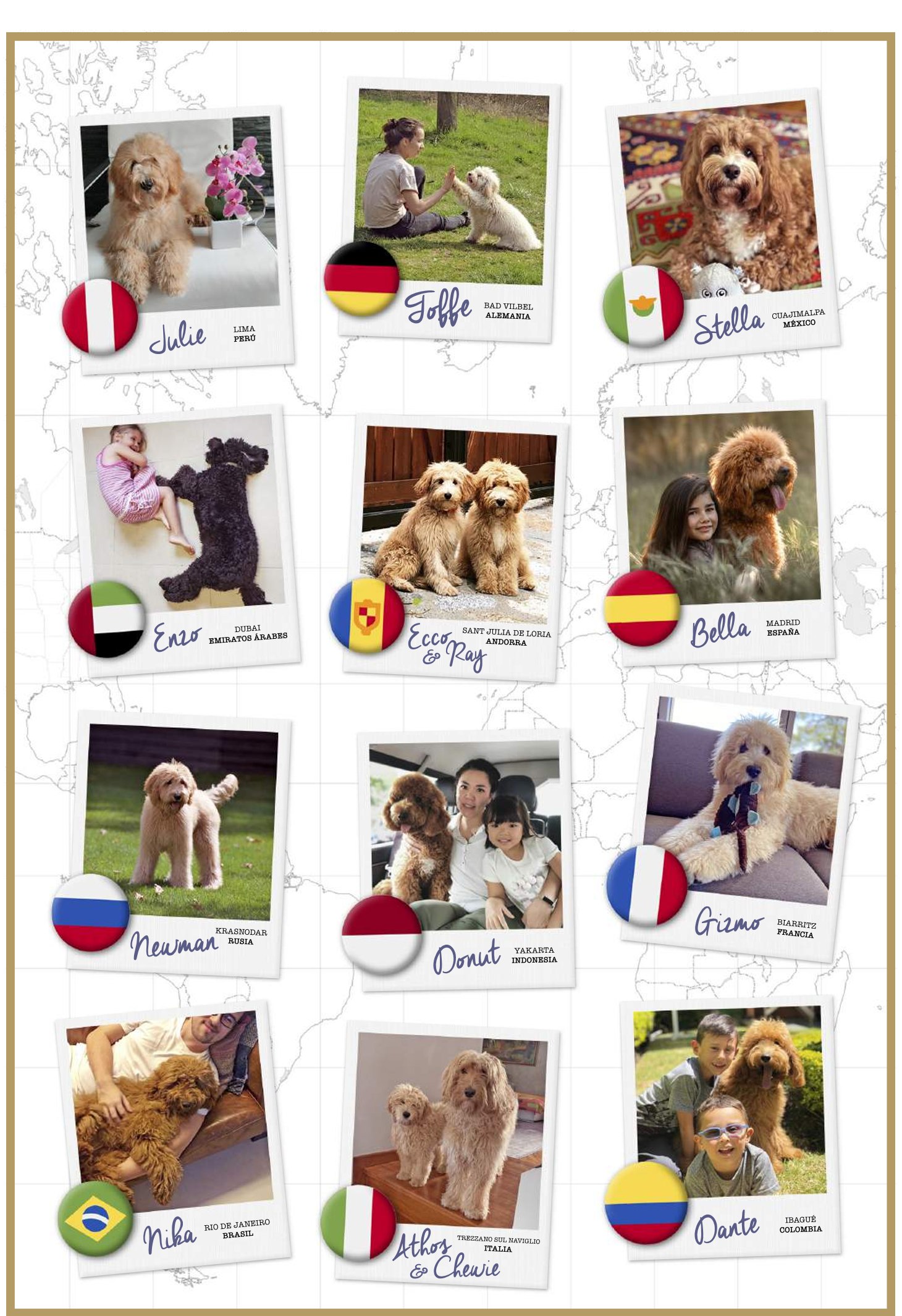
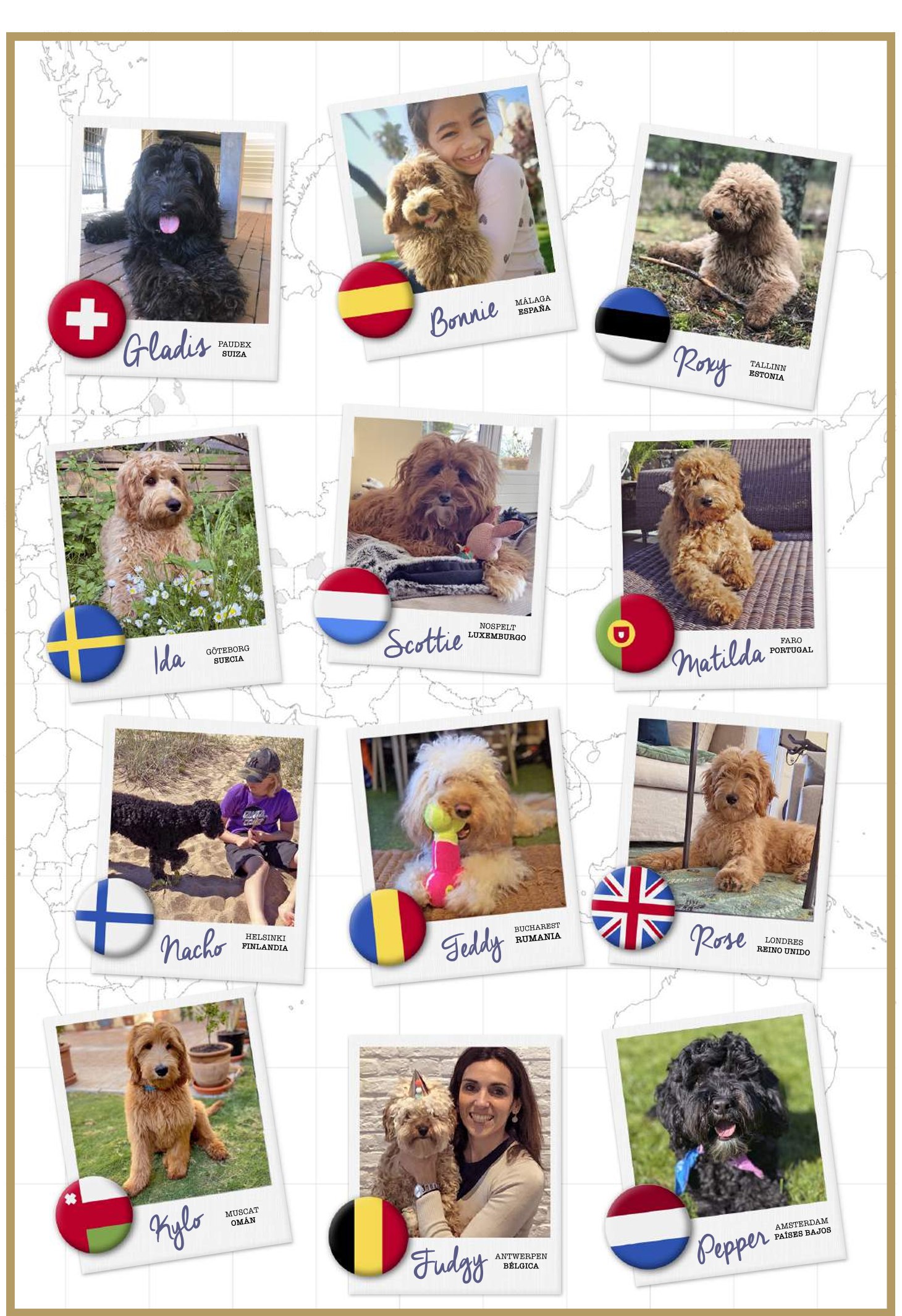
Our centre is located in Barcelona, but our Australian Cobberdogs are found all over the world! If a family lives far away and is interested in one of our dogs, we can send it to them wherever they are. It does not matter how many kilometres separate you from our centre: we ship our puppies anywhere in the world. The only requirement is that you commit to loving it forever. That is why there are already many families around the world who enjoy the love of a DOGKING puppy.
10 reasons to choose a DOGKING dog
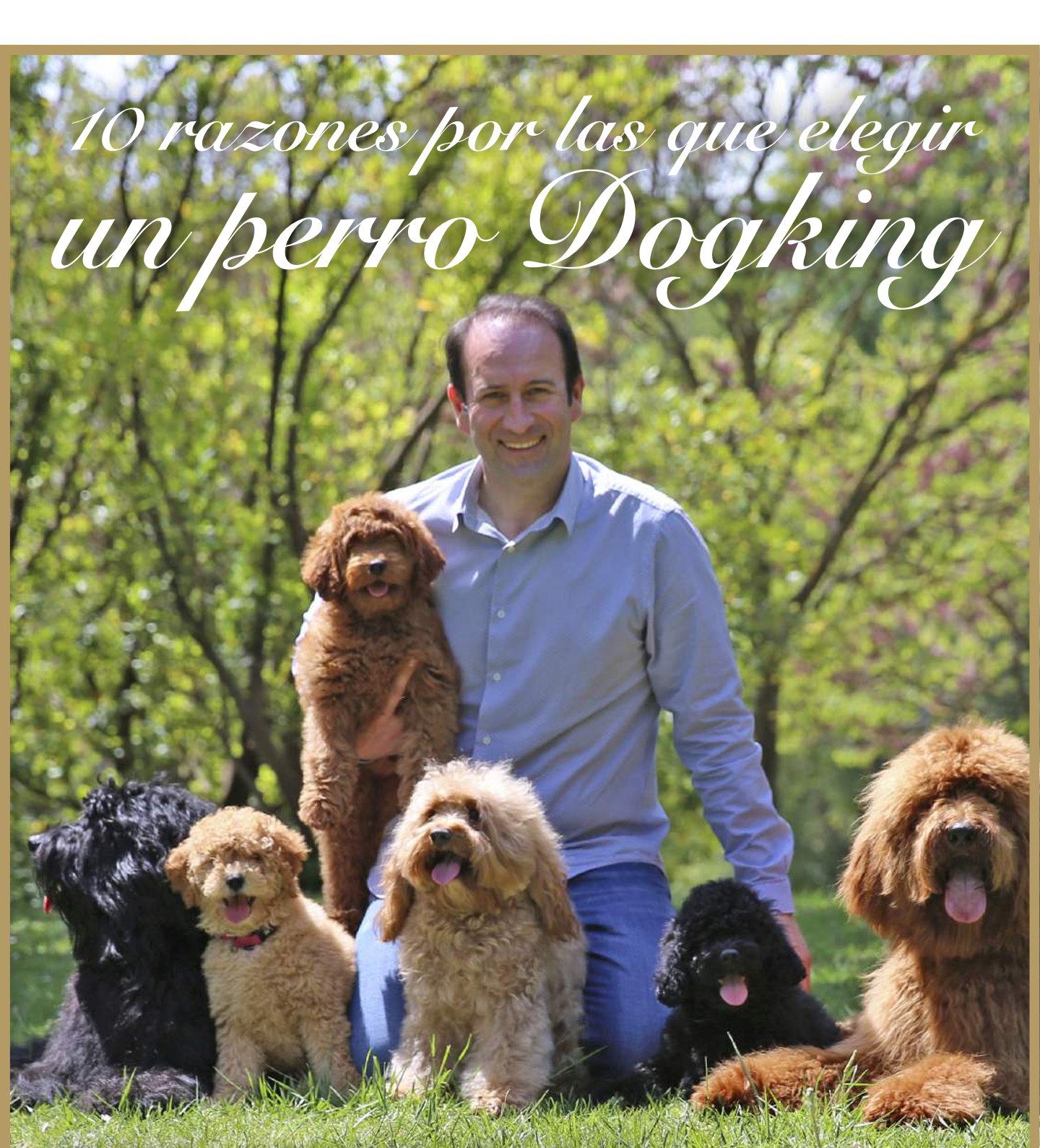
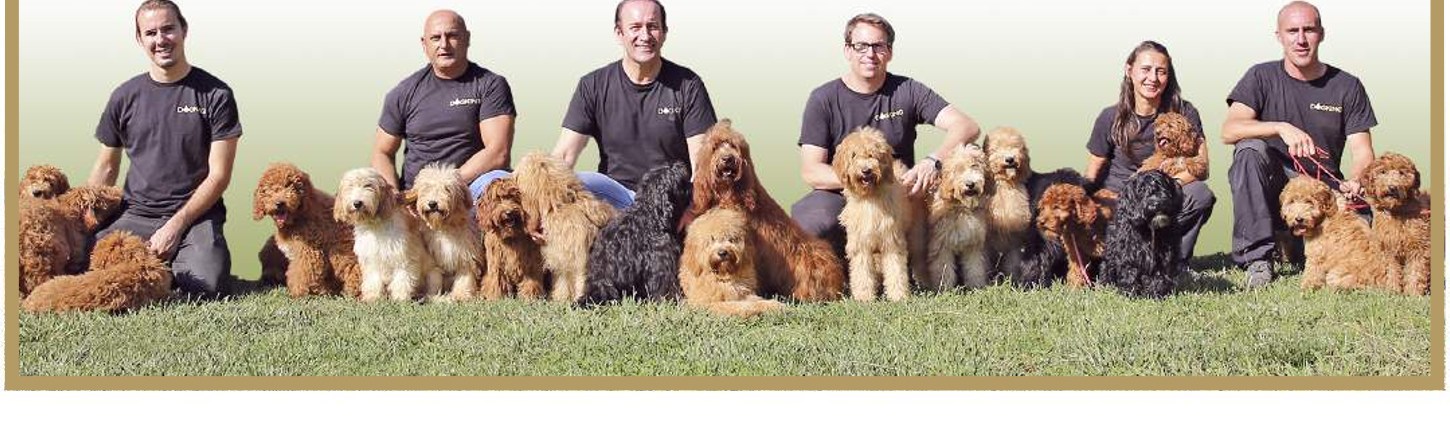
DOGKING is a comprehensive canine centre specialising in therapy and assistance dogs. We have a responsible breeding centre where we breed our puppies for families, and from each litter we select those puppies with the aptitudes to be trained as canine therapists and assistance dogs. We also have a veterinary centre, a dog grooming salon, a training centre, and we offer dog-assisted therapy and intervention services.
- Advice for the rest of your dog's life. When one of our dogs is handed over, the family receives extensive advice on the puppy's initial care to guarantee its wellbeing and, from then on, whenever they need it, they can contact us every time they have a question.
- Our puppies are supervised by vets every day. From a very young age, our vets take care of ensuring that each puppy is developing correctly, monitor its diet and provide all the vaccinations and deworming treatments appropriate for its age. That is why, when they are handed over, we can give the family their puppy with the microchip and the veterinary record book with the vaccination and deworming schedule up to date.
- Our dogs will never be abandoned. We make sure that none of our dogs will suffer the experience of being abandoned, with a clause in the contract specifying that, should the family situation change and they find themselves needing to give up the puppy, the family undertakes to inform our centre of this situation, giving it the first option to take the puppy back. In this way we commit to taking charge of the dog if the family can no longer keep it.
- Our puppies are handed over neutered. In this way, families save the cost of the surgery and the possible worry surrounding the operation, and we ensure that the dogs will enjoy all the benefits of neutering and that none of them will take part in the irresponsible breeding of dogs that fuels canine overpopulation.
- We have a social aid programme. Each year we develop new charitable projects in order to offer dog-assisted interventions free of charge at our centre and in hospitals, and we donate canine therapists to families with children affected by some rare disease, with the aim of raising awareness of the great social work that dogs can carry out. At DOGKING we believe that dogs can make the world a better place.
- The parents of our puppies live in families. Our dogs live with families that we call DOGKING Homes. These families take care of the parents of our puppies and of our therapy dogs, in order to offer them a welcoming place where they can live just like a family dog when they are not carrying out their work.
- We have our own breeding programme. We have total control over the breeding programme. This allows us to monitor the parents, the pregnancy, the birth and to take great care of the puppies. Our vets carry out a strict protocol to guarantee the health and wellbeing of each litter.
- The puppies grow up with their mother and siblings. All our puppies are raised alongside their siblings and their mother, who feeds them and teaches them the basic rules of canine behaviour and communication. That is why the minimum age at which we hand over a puppy is from 9 weeks of life, as it is the perfect moment when we talk about mental and physical health. It would be irresponsible to hand one over earlier, as the dog could develop immunological or behavioural problems.
- We are a responsible breeding centre. At DOGKING we hand over all our dogs neutered to avoid unwanted litters and not contribute to canine overpopulation, we have guarantees against the abandonment of our dogs and we provide extensive advice to new owners to raise their awareness about responsible ownership. We also guarantee that all our puppies are handed over to families. If any of them takes a while to find its home, it is included within the DOGKING Homes programme, where it begins its socialisation and training until it finds a family. In addition, all litters have been conceived by studying the characteristics of their parents so that the health and temperament of the puppies are, within the realm of possibility, the best they can be.
- Our puppies are socialised. Our puppies follow a progressive socialisation programme from the moment they are born until they go off with their family, which allows the puppy to prepare for any situation in the future. At first, an environment of calm and intimacy with their mother is created for them, to which stimuli are progressively added.
Would you like to have a DOGKING dog?
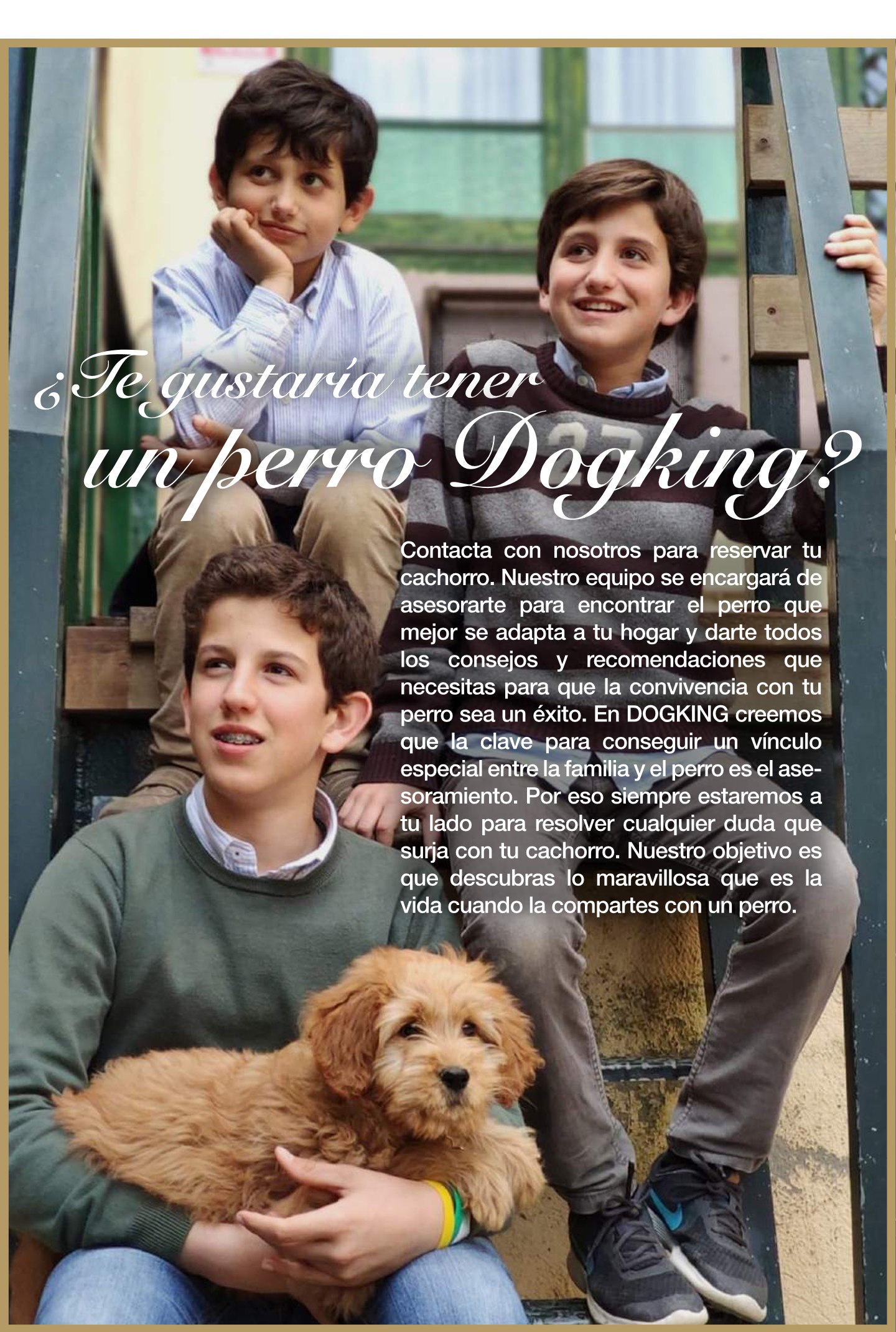
Contact us to reserve your puppy. Our team will advise you in finding the dog that best suits your home and give you all the tips and recommendations you need so that living with your dog is a success. At DOGKING we believe that the key to achieving a special bond between the family and the dog is advice. That is why we will always be by your side to resolve any question that arises with your puppy. Our goal is for you to discover how wonderful life is when you share it with a dog.