Why do dogs rub in dirt?
This common behaviour is due to their instinct
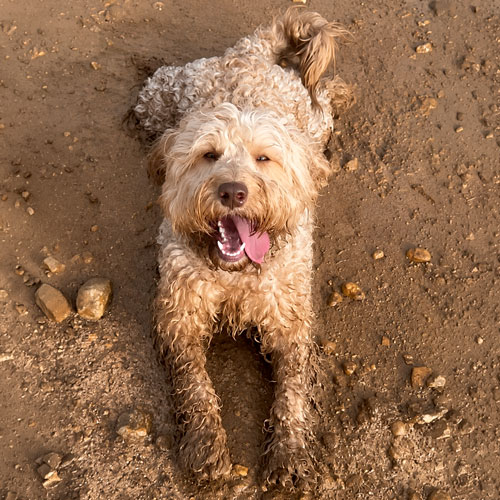
MY DOG RUBS IN RUBBISH OR FAECES
Approximate reading time: 7 minutes
If you have a dog, you've probably been horrified to find them rubbing their body through a puddle of dirty water, a pile of rubbish, other dogs' faeces or even dead animals. This behaviour, which is very common and natural for these animals, can cause us great discomfort, as it is an unhygienic and dangerous habit for coexistence in the home. However, in itself, there is nothing wrong with it, on the contrary: your dog rubbing in the dirt is an atavism or behaviour inherited from its ancestors, the wolves, so it is not considered a behavioural problem, far from it, but rather an innate and totally natural trait that is closely related to their sense of smell. But why do dogs like to smear themselves with these things that are so repugnant to us humans?
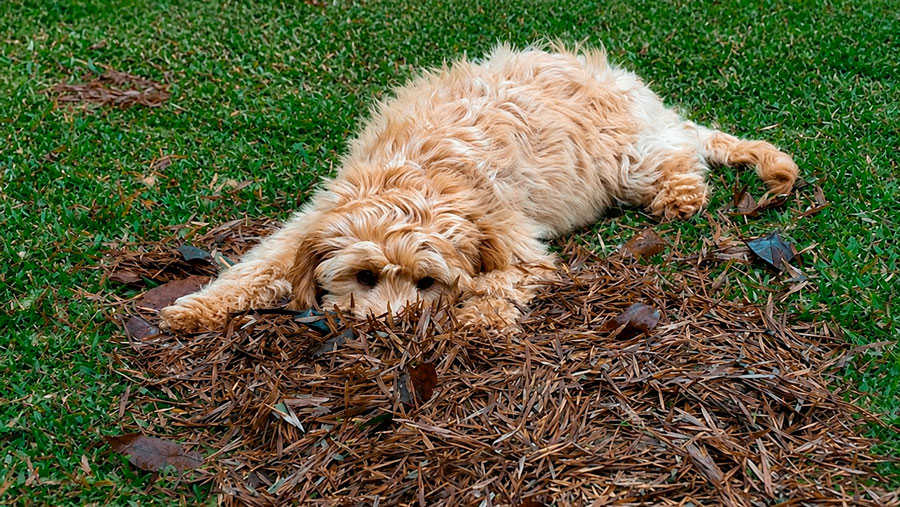
Table of contents
1. 6 reasons why your dog wallows in disgusting things
• Because of their hunting instinct
2. How do I stop my dog from rolling in the rubbish?
6 reasons why your dog wallows in disgusting things
Within this instinct of dogs to rub themselves on substances that we consider waste, there are different preferences. Faeces, urine, dead animals, rubbish, mud, puddles... Yes, it's disgusting. However, the reason for this is not that dogs are filthy, but that they have real reasons to behave in this way, and they are all related to what is undoubtedly their most important sense: their sense of smell. That's why it doesn't make any sense to scold your dog when they roll over something disgusting, as it's as natural to them as scratching or barking. Let's take a look at the main reasons why dogs rub in dirt.
• For their hunting instinct
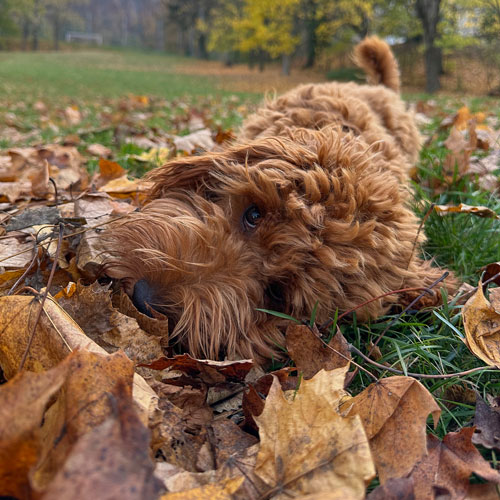
Although dogs no longer need to hunt to survive, they still retain in their DNA the information from their wolf ancestors to be good hunters and to be part of the pack. In their wild past, dogs rubbed themselves in animal faeces or carcasses to camouflage their scent and not be detected by their prey, but also to remain unnoticed by potential enemies. By neutralising their scent with stronger scents, they were able to avoid being located by other animals through their sense of smell. Interesting, isn't it?
• By marking
This motive also responds to the hunting instinct inherited from their ancestors the wolves. Dogs may roll over waste of all kinds for territoriality, with the aim of leaving their scent impregnated. By rolling in this way, they manage to leave their pheromones on the place, defending it as their property. In fact, you have probably noticed that when your dog rubs the dirt, they do it first of all with their head or muzzle. This is because dogs have a lot of pheromones in this area, so by rubbing their snouts in the dirt they get a lot of information through their sense of smell and also leave their own mark.
• To communicate
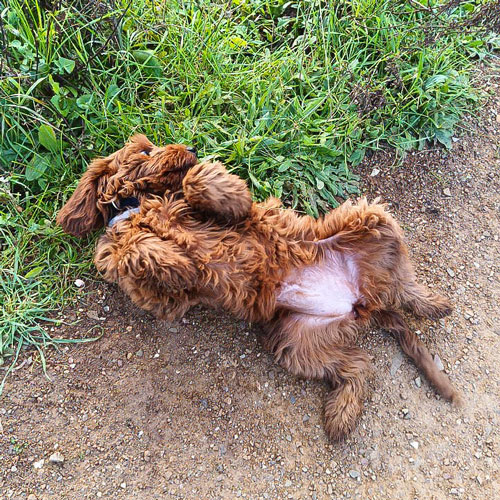
Although your dog no longer lives in a pack with other dogs, their instincts are engraved in their instinct for the most appropriate behaviour to survive and be accepted in this type of society. In the wild, these animals smeared themselves with rubbish they found on their explorations in the wild so that, on returning to the pack, they could communicate a message to their companions, who could then follow the trail of their new scent back to its source, for example, to locate a source of food in the carrion. On the other hand, by returning to the herd smelling of faeces or dead animals, they were able to convey the impression to their mates that they were good hunters, thus maintaining a good status within the group.
• To cleanse themselves
Yes, you read that right. Although it may seem counterintuitive, your pet may be frolicking in the dirt to cleanse itself of the smell of shampoo or other cleaning products. Dogs have an extremely developed sense of smell and are very sensitive to artificial smelling chemicals. For this reason, we recommend that you do not use strongly scented soaps to wash your furry friend. Instead, opt for neutral shampoos that have a mild scent, as this will prevent your dog from having to smear dirt all over themself when they go outside to try to cover up a scent that, although very pleasant for you, is unbearable for them.
• Due to emotional problems
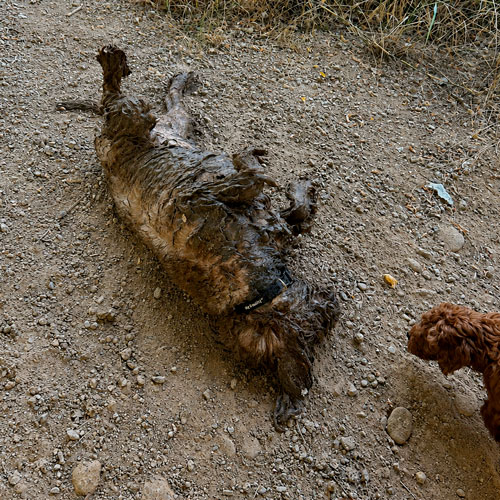
If your dog's behaviour of rubbing in the faeces, rubbish or dirt they find in the street is a one-off occurrence, there is no need to worry. However, if you notice that this behaviour is more frequent, it may be due to stress, anxiety or boredom. Many dogs do not have enough stimulation in their day-to-day lives to feel happy and relaxed, so they will seek out any behaviour to relieve this pent-up energy. In addition, if we scold or yell at our dog when they rub in the dirt, we will be reinforcing this attitude. A dog may repeat this behaviour over and over again in order to get their owner's attention if they feel bored and lonely in their life.
• Because they like the smell
This reason may also be hard to believe, but, yes, dogs' sense of smell is very complex and works differently from the human sense of smell, as it is much more sophisticated and sensitive, even picking up volatile chemicals that are totally unnoticeable to us. This difference can cause your tastes to be very different, and just as you love the smell of coconut in your dog's shampoo and are repulsed by the smell of faeces or rubbish, for your furry friend it can be the exact opposite.
How do I stop my dog from rolling in the rubbish?
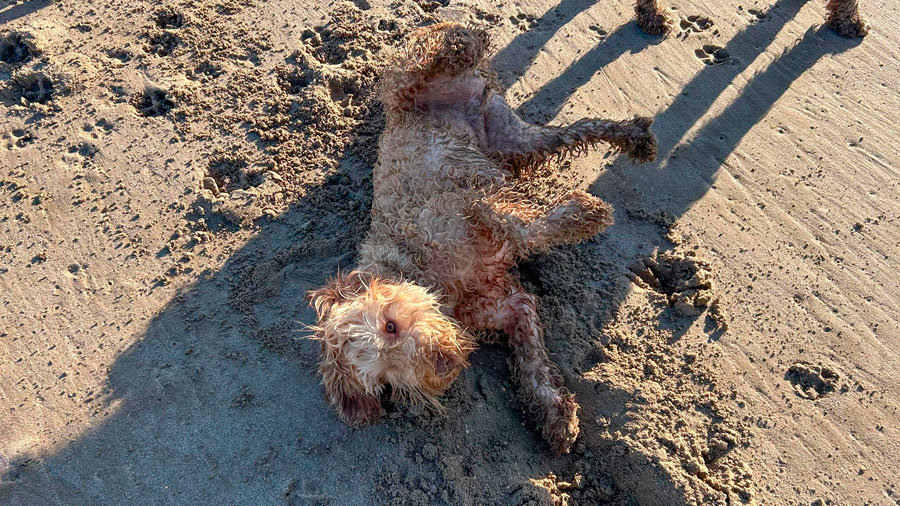
As we said, your dog rolling in filthy waste is not a behavioural problem, but an innate and natural attitude. However, and for obvious reasons of hygiene and safety, it can be a problem when it comes to living together at home, so it is a good idea to eliminate this behaviour in your pet. Here are some tips to stop your dog from rolling over dirty things.
- Work on training and teach them signals such as ‘stop’ or ‘come’ to stop them from approaching those disgusting things.
- If they obey, remember to reward them with treats or petting, but if they continue, say ‘no’ firmly to show your displeasure and continue the walk elsewhere.
- Gently redirect them on the lead, avoiding dangerous areas that may tempt them.
- Do not overreact by shouting or punishing your dog, as they will not understand your anger at what is natural to them and you will create a lot of frustration. In addition, you could perpetuate this behaviour by getting attention from you.
- Distract their attention with their favourite toy, but offer it only when they have obeyed your signal and are calm.
- Avoid strong-smelling shampoos or lotions and replace them with mild-smelling products.
- Stimulate your dog sufficiently with physical exercise, long, relaxing walks, scent and mind games, attention and lots of affection.
For some dogs, this atavism of rubbing at dirt can become a fixation. If you are unable to redirect the problem, seek professional advice from an ethologist to help you resolve the situation. Your dog being in contact with rubbish, excrement or dead animals is dangerous for them, as it can expose them to bacteria and disease.
On the other hand, if you have not been able to prevent your furry friend from rolling in the dirt, take them home as soon as possible to bathe them with water and a neutral soap with a pH that respects your skin. If your pet has long hair, you can brush it beforehand to get rid of any debris or knots that may have been created. This way they will be clean, disinfected and as good as new to continue exploring the world by your side.