Does my dog know when I'm sad?
Your pet is capable of sensing how you feel and even tries to comfort you.

CAN DOGS CAPTURE OUR EMOTIONS?
Approximate reading time: 8 minutes
If we ask someone who lives with a dog if they believe that they are able to notice when they feel sad, happy or angry, we are sure that their answer will be affirmative. When you live with a furry friend you realize that they are the first to join your happiness in the good times, and to stay by your side in your down times. But what does science say about it? Are dogs capable of capturing human emotions?

To talk about this issue, it is important to understand how complex and deep the emotional bond between a person and their dog can be. Different scientific studies have corroborated over the years how owners and pets secrete oxytocin, known as the love hormone, when they stare into each other's eyes or share cuddles and strokes. It is this intense emotional connection that causes your dog to not only be able to differentiate between your different emotions, but also to be able to react to them to make you feel better.
Table of contents
1. How can my dog know if I am sad or happy?
• The view
• The ear
• Smell
2. What does your dog do when you are sad?
How can my dog know if I am sad or happy?
Dogs are absolutely social animals and, according to some research, they are capable of connecting with human emotions through the mirror neurons in their brain, synchronizing with our mood. This is why instilling calm in your pet through relaxed body language and a soft tone of voice can calm them down in stressful situations. It has also been shown that dogs react to babies crying, generating cortisol, the so-called stress hormone. Before experiencing this kind of emotional contagion, dogs are able to figure out how we feel, distinguishing between different emotions. According to the 2018 study published in Learning & Behavior, these animals showed changes in their gaze and heart rate when faced with six basic emotions: anger, fear, happiness, sadness, surprise and disgust. But how does your dog know when you're sad or when you're feeling upbeat?
• Sight

In case you hadn't noticed, your dog spends the day watching you. They know by heart all your facial gestures and body movements. That is why they only have to look at you to guess if the expression on your face and body is relaxed and confident or if, on the contrary, they express tension or dejection.
• The ear

Dogs can distinguish through their hearing the different nuances in our tone of voice, relating each of them to a different mood. A study at John Hopkins University in the US gathered 34 dogs of different breeds and ages and placed them behind a glass door. On the other side, their owners were asked to sing first and then pretend to cry. What the research showed was that the dogs tried to reunite with their owners by pushing the door up to 3 times faster when they thought their owners were crying. This tells us that these incredible animals not only know when we are suffering, but are able to overcome obstacles in record time to reunite with their masters and comfort them. Additionally, when the researchers measured the dogs' stress levels, they had generated cortisol when their owners cried.
• Smell

Smell is the most developed sense in dogs, and with it they can easily capture the biochemical and hormonal changes that occur in our body when we are sad. Thus, it could be said that your dog “smells” your sadness with their incredible and powerful nose. Have you ever been crying and your pet has come up to smell and even lick your tears? It is their way of capturing information to find out what is happening.
What does your dog do when you are sad?
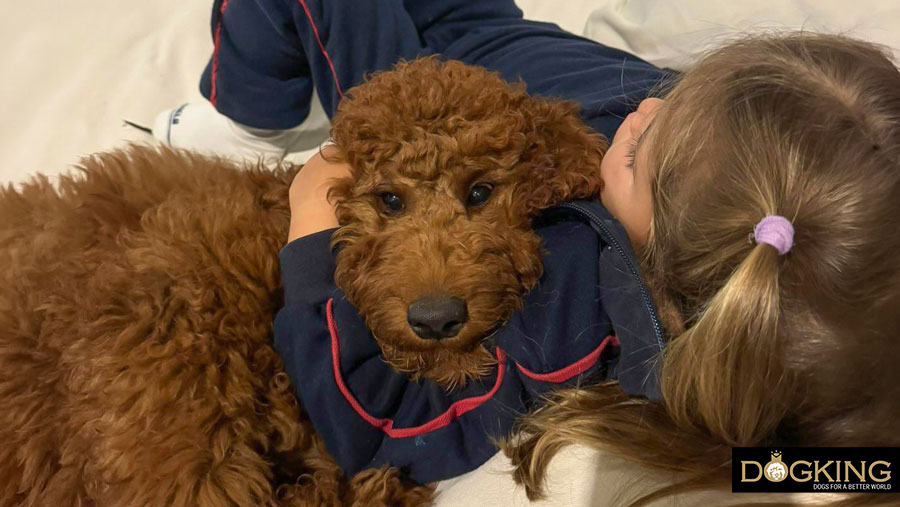
Each dog has a different temperament, which will make them react differently to your emotions. Generally, when dogs see us sad, they tend to approach us and offer us physical contact by lying on or next to us, licking us or resting their head on our lap. Others even bring us some of their favorite toys to try to distract us and have fun with.
However, don't think that your dog doesn't love you if they don't come to you when you're sad or crying. In the study that we mentioned before, it was shown that the dogs that had not come to their owners had very high levels of stress that had prevented them from reacting, remaining as if blocked. It is possible that sensing your emotional discomfort makes your furry friend uncomfortable and they prefer to withdraw to give you your space and return to you in a few minutes. This difference in attitude can also vary according to race, character or education. Therapy dogs receive training that makes them especially receptive and sensitive to people's emotions, like Australian Cobberdogs, who establish a very deep relationship with their owners.
In short, yes, your dog can realize that you are sad and could even try to comfort you so that you feel well again soon. The bond that unites dogs and their owners is incredible, and there is still much to discover about this very special relationship. Science has managed to prove their ability to identify our emotions, react to them and even imitate them through contagion. Regardless of scientific studies, there is no doubt that in moments of sadness, the faithful, silent and non-judgmental company of our furry companions is a true blessing. They are the best comfort and support on difficult days!