How many words can dogs understand?
A dog's understanding of language depends on breed, genetics and training.
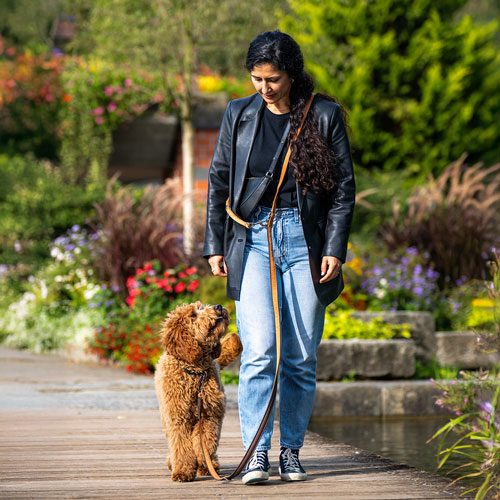
DOES MY DOG UNDERSTAND ME WHEN I TALK TO THEM?
Approximate reading time: 8 minutes
Have you ever looked your dog in the eye and felt absolutely certain that they understood you when you spoke to them? Science proves you right. According to different scientific studies, dogs — one of the most intelligent animals — are capable of understanding many of the words we address them with on a daily basis. Moreover, their brain’s processing of language — located in their left hemisphere — works in a very similar way to that of humans. Although the ability to understand more or fewer words depends on your dog’s breed, genes or training, don’t underestimate them: they understand you more than you think!
Table of contents
1. What words can my dog understand?
• How does my dog understand words?
• The importance of body language
• Ability to learn words by breed
2. How can I teach my dog new words?
What words can my dog understand?
According to a study by the University of British Columbia in Vancouver, dogs can understand an average of 160 words, although in the most privileged cases the list could be as long as 200. Among the words your pet can understand are their name and words you repeat to them on a daily basis, such as “sit” or “stay”. Although experts are sure that for dogs, communication based on visual or olfactory stimuli would be more effective, they are capable of adapting to our spoken language as a way of satisfying our demands and receiving our affection and rewards as a reward. In addition, they are capable of solving other complex problems and their level of intelligence is known to be on a par with that of a 2-year-old child.
• How does my dog understand words?

By subjecting different dogs to brain scans, scientists realised that there is not much difference between the way they process language and the way we people do. Your dog figures out what a word means to you by gathering information about it in different situations. With the left hemisphere, your pet learns to detect the specific word, while with the right hemisphere, responsible for managing emotions, they isolate the tone in which it has been pronounced (affectionate, angry, questioning...). In this way, they manage to understand the full meaning of the word at any given moment.
• Learning by mapping
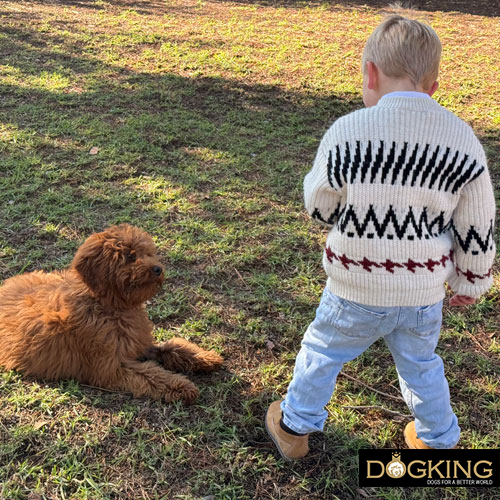
The process of language learning by dogs follows a rapid mapping system. These animals cross-reference the words they hear many times with the situations, actions or objects with which they coincide. Therefore, the best way to teach your dog a new word is to repeat it regularly. If it is a word that is important to you, be sure to say it clearly and always accompany the action you want your pet to perform. Of course, don't forget positive reinforcement so that your dog completes the learning process.
• The importance of body language
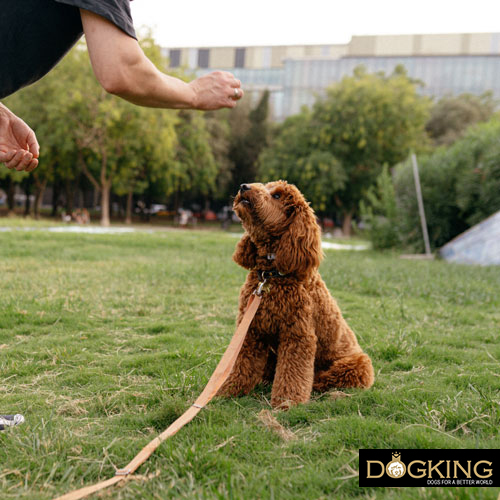
They say that a dog is man's best friend. And, among many other things, one of the greatest signs we have of this is the ability to adapt to our oral communication system. It is much easier for a dog to be guided by smell and visual stimuli. Therefore, if you want your pet to learn new words, we advise you to accompany them with your body language with signals, gestures and your body posture.
• One word at a time

Although dogs can be very intelligent and can isolate words within sentences, it is much easier for them to understand single terms. If you want to train your pet to expand his vocabulary, it is best to pronounce words one at a time, always clearly and precisely. Avoid using words with similar pronunciations together or working on them at the same time, as this can confuse your dog.
• Better to use concrete words
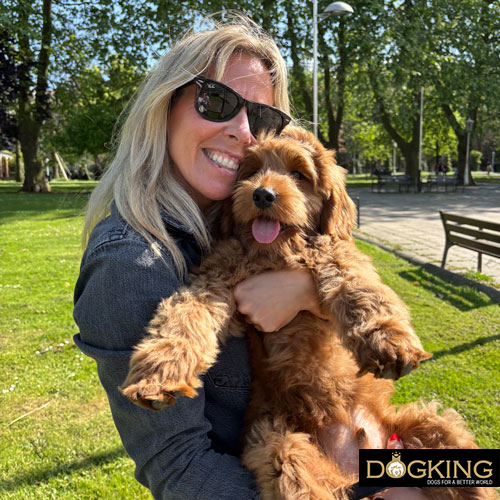
Did you know that dogs are much better at learning words for concrete objects? Some examples are “ball”, “toy” or “food”. Words that refer to emotions, such as “sad” or “love”, are more difficult for them to learn, as they have an abstract meaning that they cannot easily cross-reference with situations or objects in reality. Moreover, according to the study mentioned above, the chances of success are even greater if you practice with words beginning with the consonants p, t, c, k and q.
• Ability to learn words by breed
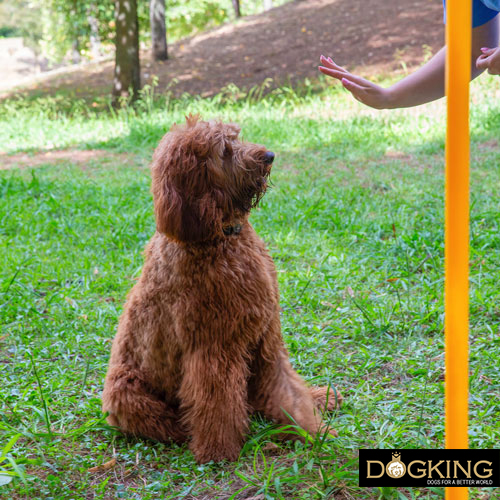
As with many other canine traits, a dog's ability to learn words is influenced by breed. The most intelligent dogs in this respect are the Labrador, Doberman, Poodle, German Shepherd and Border Collie. The latter breed is considered to be the smartest dog on the planet. His name is Chaser and he knows no less than 1000 words.
The Australian Cobberdog is a dog that stands out for their intelligence and docility. Their calm character and excellent bond with humans make them perfect for learning language. With proper training they can learn many words and follow all the signals we give them diligently and calmly. That is why they are excellent companions for children and people with special needs, as well as excellent therapy dogs or family dogs.
How can I teach my dog new words?
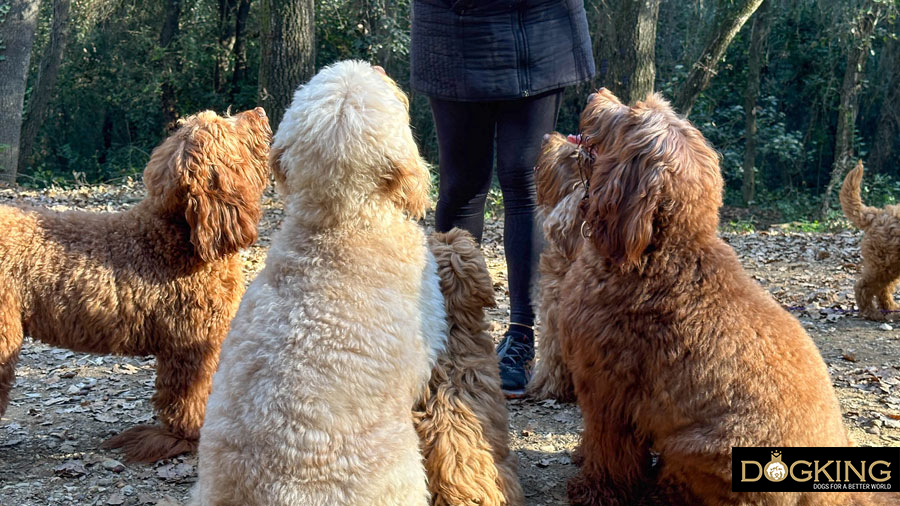
Now that you know that your dog is able to understand you much more than you think when you talk to them, you are probably eager to teach them more vocabulary. Remember the tricks we have explained and keep in mind that what motivates your dog to understand you is positive reinforcement. Repeat new words regularly, accompany them with relevant intonation and visual stimuli whenever possible, and give your dog a big reward when they understand your signals.
In a study conducted by Hungarian scientists and published in Frontiers in Neuroscience, several dogs were shown two toys they had worked on learning language with among a host of other objects. When their brains underwent an MRI scan, it could be seen that their brains lit up when the scientists linked the names of the two toys — which were very different from each other — and the toys in question. Of course, the key throughout the learning phase was to reward the dogs correctly by rewarding successes.
Dogs are highly intelligent animals that, according to studies, are capable of operating simple machines and even “tricking” animals and people for their own benefit in order to obtain rewards. If you want your beloved pet to be happy reaching their full potential, we encourage you to practice new words with them but also to remember the ones they already know. Mental stimulation and routine practice are key to a dog's mental health. With a small session a day, perseverance and good tools, we assure you that you will notice great changes in the level of understanding of your best furry friend. And, remember, if you have any doubts, you can always count on the advice of a trainer.