Dogs and autism: what does the science say about the relationship between dogs and people with ASD?
The benefits of dog therapy for people with autism.
HOW DO DOGS HELP CHILDREN WITH ASD?
Estimated reading time: 8 minutes
In this sense, science has shown in different studies how dogs can greatly improve the quality of life of people with autism spectrum disorders, especially in the case of children, the stage at which it is usually diagnosed. ASD is characterised by difficulties in social relationships and in the ability to develop functional communication, but the deep bond that these children establish with dogs allows them to improve in these and many other aspects.
Table of contents
1. Benefits of dogs in autistic spectrum disorders
• Accompanies the child at all times
• Development of empathy and self-esteem
• Encourages learning and reduces frustration
2. Which dogs are best for helping children with ASD?
Benefits of dogs in autism spectrum disorders
According to a study by the University of Missouri, dogs that live with children with ASD develop very strong bonds with them. This is because there are no social codes to learn and decipher in the relationship with the animal, which is difficult for people on the autistic spectrum. On the contrary, the interaction with the dog is much more natural, as language is not necessary, but non-verbal communication and sensory stimuli come into play. Dogs can help children with ASD either as part of their family (through assistance dogs) or as therapy dogs, intervening in the patient's sessions to improve their difficulties. In either case, the children receive numerous physical, psychological and learning benefits from their relationship with the dogs. These are some of the most outstanding:
• Reduces anxiety
Science has confirmed on many occasions that dogs are great allies in reducing stress in children with ASD. According to the WHO, 1 out of every 160 children suffers from one of these disorders, which implies a greater possibility of suffering anxiety than children with normal development. Through contact with their pet or therapy dog, these children feel calmer and more secure, it helps with emotional regulation and can lower levels of cortisol (the stress hormone).
This is especially important in the case of escape behaviours in the street, which are common in autistic children who feel very anxious at a certain time. In these situations, the dog stops and blocks the child's escape, immediately calming the child and avoiding any danger.
In addition, it has been shown that the coexistence of children with ASD with dogs reduces the stereotyped behaviours typical of these disorders, making them calmer and more focused in stressful moments for them.
• Accompanies them at all times
Communication and social bonds are a challenge for children with ASD, so it is very common for them to feel isolated and misunderstood. Incorporating a dog in a family with an ASD case, although it is a decision that should not be taken lightly, offers constant companionship to the child. This will not only help them not to feel alone and isolated, but, in the case of assistance dogs trained for this purpose, it will also keep them protected in any risky situation, stopping the child if they try to run away or warning them with barks if they suffer a crisis or problem.
• Development of empathy and self-esteem
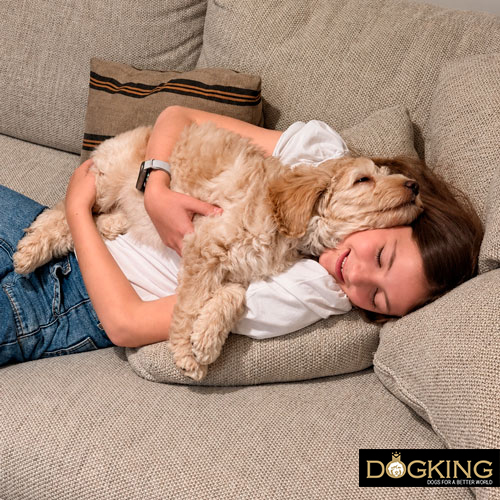
Children with ASD who interact with dogs, either in therapy or as part of their family, are more likely to develop greater empathy. Through bonding with the animal, children learn to distinguish between their own perception (their perception of themselves) and that of the dog, understanding that there is causality between their actions and the animal's reactions. Dogs are great communicators of sensations and emotions for children with ASD as they do not rely on spoken language.
On the other hand, by helping to increase the autistic child's socialisation and independence, they increase his or her mood, motivation and self-esteem, making him or her more relaxed, confident and self-assured.
• Promotes learning and reduces frustration
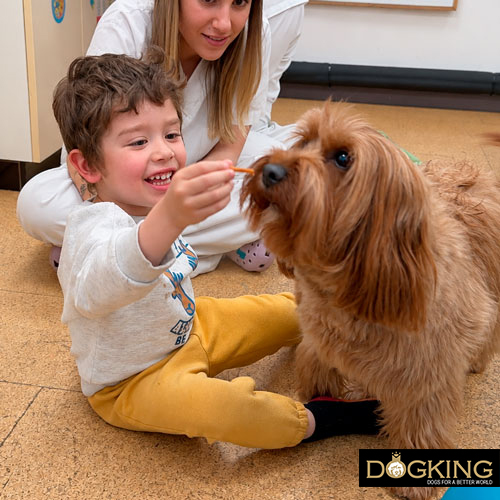
For children with ASD, learning can be a challenge, but with dog-assisted therapy they can acquire knowledge through play in a much more dynamic and effective way. Through these practices, the child can also manage frustration levels better, as he/she has to adapt to the dog's timing and behaviour. Extrapolated to everyday family life, a better tolerance to frustrating situations can be of great help, favouring understanding and relationships between all members of the household. The child will be more flexible and adaptable to new situations and environments.
• Improves motor skills
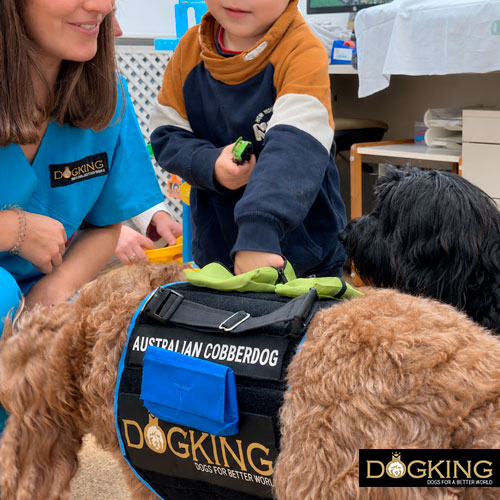
Dog-assisted therapy for people with ASD also offers physical benefits associated with dog care and walking. With the canine therapist, the child can practice at home all kinds of exercises that allow them to train their fine motor skills and coordination, with games such as throwing the ball, among other physical benefits.
• Improves attention
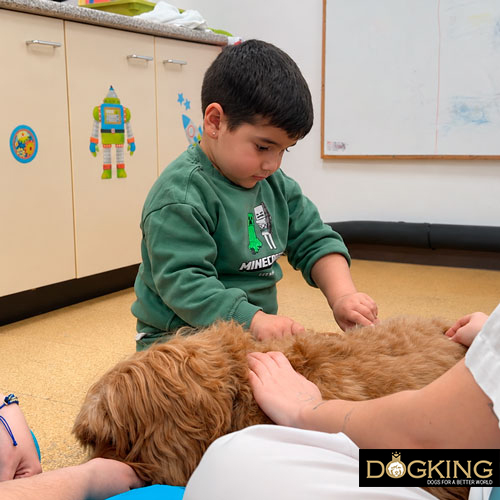
Attention deficits in ASD children can benefit greatly from the company of a dog. Through the deep bond that is generated between them, they can focus for much longer on activities such as playing with or caring for the animal, which is an interesting but not stressful stimulus for them. Improving their level of concentration is important in the child's development so that they can complete their learning at all levels.
• Their senses
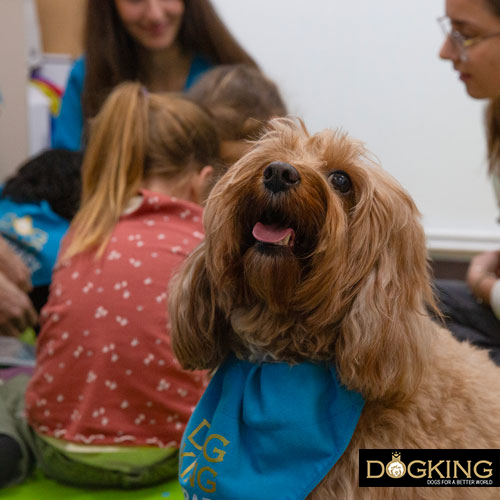
Experts assure that, in the cases of children with autism, dogs work as a kind of gateway between their world and the outside world. One of the aspects that help in this bridge is the improvement in the perception and management of sensorial stimuli. Through touch or sight and the interpretation of the different sounds made by the dog, children feel more connected to the reality of the moment. This way of relating to their pet will end up generating a habit that can greatly improve this difficulty presented by people with ASD. In this sense, it has been described that autistic children have greater eye contact when working or interacting with dogs.
• Social interactions
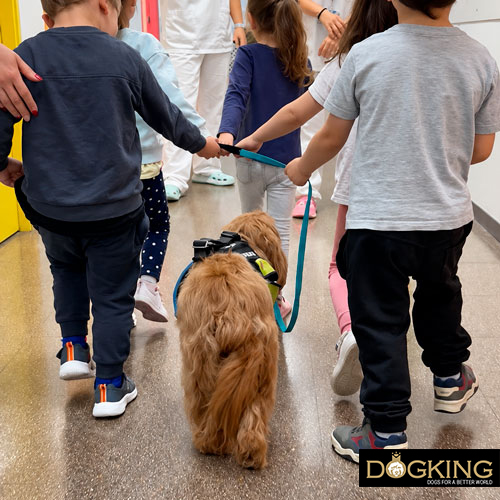
Dogs encourage interactions with other people, such as family members and peers, reducing social isolation.
Dogs can act as social catalysts for children with ASD, helping them to develop communication skills. Children may be more motivated to talk to a dog than to a person.
Which dogs are best for helping children with ASD?
Before bringing a dog into a family with a child with ASD, it is important to make sure that the dog has the right character to accompany the child in his or her difficulties. In this sense, the most appropriate thing to do is to have a canine therapist who is specifically trained to perform this function. As explained above, canine therapists add both day-to-day assistance and therapy skills. In this sense, Australian Cobberdogs are perfect dogs to be trained for flexible and adaptive behaviour to meet the needs of their owners.
They are calm, reliable and patient dogs, and are also very affectionate and sociable with all kinds of people, especially small children. In addition, a very prominent trait that children with these autistic disorders can benefit from is their deep, steady gaze, which will help them work on eye contact and connect emotionally with their pet.